

Who Needs to Repent of America’s Sins?
It’s probably not those who want to do so.

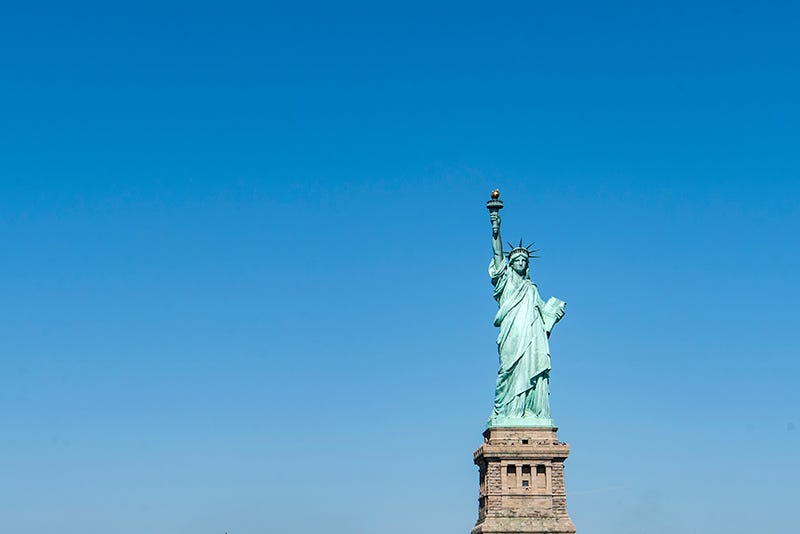
As the United States of America celebrates the 250th anniversary of its founding, many of its citizens are not in a celebratory mood.
According to Gallup, just 33% of U.S. adults say they are extremely proud to be an American. The percentage expressing the greatest pride in their nationality is a record low.
Another 20% say they are “very proud.” Others are “moderately proud” (22%), “only a little proud” (15%) or “not at all proud” (9%).
If you were to ask the 2 in 3 Americans without extreme pride what’s holding back their patriotic pride, many would likely list what they consider the sins, both past and present, of our nation.
To be sure, America, like every other nation, has flaws. Obviously, there were great evils condoned at our founding and other great evils allowed or even encouraged today.
But what exactly should a Christian do about those sins? And should they prevent the Christian from expressing patriotism?
To answer the second question first, loving your home country can be a rightly ordered and practiced love.
In The Four Loves, C.S. Lewis directly addresses patriotic admiration. While acknowledging patriotism can become idolatrous, Lewis first establishes that it can be healthy and doesn’t require a sinless country because we see proper patriotic love in Jesus.
In Matthew 23:37, Christ laments over Jerusalem while acknowledging the people of that place kill the prophets. He also knows they will soon kill Him. Yet, Jesus says He wishes He could gather the city up as a loving mother hen gathers her chicks under her wings.
If we reject all patriotism as evil, Lewis says, “We cannot keep even Christ's lament over Jerusalem. He too exhibits love for His country.”

This means we are to love our nation despite its flaws, but not because of them. We will be confronted by evil acts committed by our government and its leaders. In these moments, Lewis would encourage introspection but likely not repentance.
In “Dangers of National Repentance,” a 1940 essay republished in God in the Dock, Lewis addresses a mood prevalent in post-World War I Great Britain.
Even recognizing the wrongs committed by the Nazis, there was still some soul-searching by many outside of Germany for the role their nations played in creating an environment that allowed or even encouraged the rise of fascism.
In response to what he sees as a growing tendency toward national repentance among younger Britons, Lewis argues that such a decision is both too easy and too dangerous.
National repentance allows us to express remorse and contrition over actions that we had no real control over. In reality, we are repenting for the sins of our neighbors, those governmental leaders who made the decisions. Lewis writes:
By a dangerous figure of speech, he [the one repenting of national sins] calls the Government not ‘they’ but ‘we’. And since, as penitents, we are not encouraged to be charitable to our own sins, nor to give ourselves the benefit of any doubt, a Government which is called ‘we’ is ipso facto placed beyond the sphere of charity or even of justice. You can say anything you please about it. You can indulge in the popular vice of detraction without restraint, and yet feel all the time that you are practicing contrition. A group of such young penitents will say, ‘Let us repent our national sins’; what they mean is, ‘Let us attribute to our neighbor (even our Christian neighbor) in the Cabinet, whenever we disagree with him, every abominable motive that Satan can suggest to our fancy.’
This type of repentance, Lewis saw, was attractive to a certain group of people, often educated young adults, who were least likely to need it. They have been distrustful of their nation almost since birth.
Asking these individuals, those 9% who are not proud at all to be an American and perhaps some of the other more hesitant patriotic citizens, to repent of America’s sins is to ask them “not to mortify, but to indulge, their ruling passions.”
There may indeed be “communal sins” for which we need to repent but those are the sins most common and most approved of our “own age and class,” what we might call our subculture.
Look around at those who share your politics and cultural perspective, what actions and attitudes do you them condone that the Bible condemns? Those are the sins for which repentance may be necessary or at least beneficial.
For some, repenting or even acknowledging the sins of their country may be a worthwhile exercise because it costs them something. Those who actually have immense pride in their nation could not repent “without a struggle.”
So if you were to ask C.S. Lewis if you need to repent of America’s sins? He would probably say, “Only if it hurts to do so.”
More from The Wardrobe Door
Related


Recent


Elsewhere
Gen Z Churchgoers Attend More But Often Lag in Application — Lifeway Research
Americans Less Likely to See the Religious as Positive Influence on Society — Lifeway Research