

Pope Leo Quotes Lesser-Known C.S. Lewis Work
Door Jam: June 29, 2026

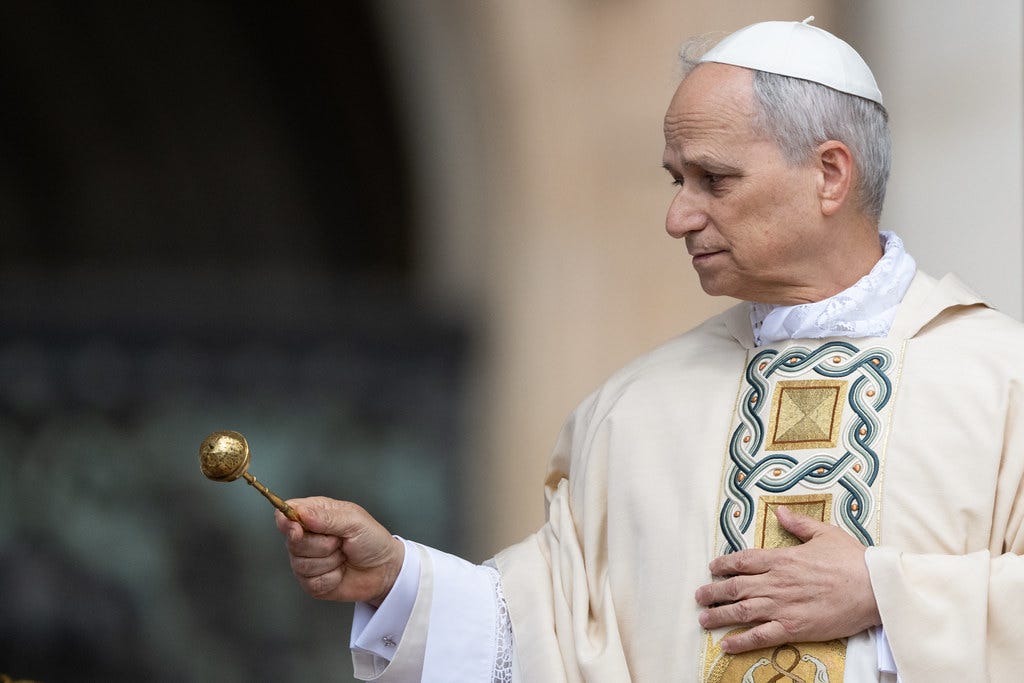
As he thinks about artificial intelligence, Pope Leo XIV has been reading the Inklings. In his first papal encyclical, Leo quoted Gandalf from J.R.R. Tolkien’s The Lord of the Rings. Now, in speaking with writers, the pope cited C.S. Lewis’ under-appreciated An Experiment in Criticism.
In his remarks to the authors, Pope Leo quoted C.S. Lewis’s observation that reading a literary text puts us in a position to “see through the eyes of others,” broadening our perspectives and fostering empathy.
“When we delve into the very depths of our humanity, we are not far from God; for there, in the midst of very human stories, God reveals himself,” said the Pope.
Leo XIV is not the first pope to quote Lewis. His papal predecessor, Pope Francis, also referenced Lewis, An Experiment in Criticism, and quoted that specific line.
In his letter encouraging those training to be Catholic priests, Pope Francis directly quotes this portion:
In reading great literature, I become a thousand men and yet remain myself. Like the night sky in the Greek poem, I see with myriad eyes, but it is still I who see. Here, as in worship, in love, in moral action, and in knowing, I transcend myself; and am never more myself than when I do.
He then references Lewis’ work again:
In terms of the use of language, reading a literary text places us in the position of “seeing through the eyes of others,” thus gaining a breadth of perspective that broadens our humanity. We develop an imaginative empathy that enables us to identify with how others see, experience and respond to reality. Without such empathy, there can be no solidarity, sharing, compassion, mercy. In reading we discover that our feelings are not simply our own, they are universal, and so even the most destitute person does not feel alone.
Obviously, the deeply Catholic Tolkien would’ve loved being quoted by the pope. Earlier in his life, the Irish Protestant Lewis probably would’ve had more complicated feelings about it. Later in life, the Lewis who defended the idea of mere Christianity would’ve surely felt honored.
As for me, a very low-church Protestant, I appreciate that both myself and the pope himself can draw from the Inklings in the mid-1900s to address issues in the 2020s.
If you haven’t read An Experiment in Criticism, you are missing a work that can inspire people across the theological spectrum to think more deeply about art, technology, humanity, and theology.
A few years ago, I wrote a series of articles applying Lewis’ work to better critique and understand television.


Not Safe But Good
J.R.R. Tolkien quote of the week
Since we had the Catholic pope quoting the Protestant Lewis, I figured I would return the favor and quote the Catholic Tolkien this week.
This weekend, I finished The Fellowship: The Literary Lives of the Inklings: J.R.R. Tolkien, C. S. Lewis, Owen Barfield, Charles Williams. In it, the authors quote a beautiful line from Tolkien in a letter to his son Michael.
Perhaps, this can serve as an anecdote to much of the modern cynicism and social media’s tendency to encourage us to think the worst of others.
For myself, I find I become less cynical rather than more — remembering my own sins and follies; and realize that men’s hearts are not often as bad as their acts, and very seldom as bad as their words.
The Letters of J.R.R. Tolkien: Revised and Expanded Edition
The Problem of Printers
Bad C.S. Lewis book covers

This is the very real cover of the copy of An Experiment in Criticism that I own. Several academic works by Lewis published by Cambridge University Press have similar uninspiring covers. This is certainly an instance where you shouldn’t judge a book by its cover.
Behind the Wardrobe
Sneak peek at the bonus articles
Updates on the upcoming Narnia and Middle-earth movies
Both book series fill top book lists
More on Lewis and AI
Vice President Vance’s Lewis reading
A former Tolkien home going on sale
Revelations from a newly discovered Tolkien letter
And more!
