‘Toy Story 5’ Finds Franchise Threads Starting to Fray
Latest installment introduces tech but lacks the conviction of a full-throated critique
Toy Story 5 is quintessential Toy Story: a heartwarming story about the innocence and inevitable loss of childhood. Young viewers share in the joys and smiles, while their parents laugh at the inside jokes and secretly wipe away tears.
But as the story pushes into its third decade and electronics invade the play space, cynicism has finally reached the seemingly earnest franchise.
In previous sequels, the franchise has insinuated the story has ended. The toys were passed down to a new child in Toy Story 3. In the fourth installment, Woody trades life in a child’s bedroom for his own version of a grown-up existence: saving lost toys. Despite those previous perfect endings, however, Disney keeps wringing another story out of the toys.
Because of the depth inherent from the beginning, Toy Story movies have continued to enchant. Even in Toy Story 5, the old magic occasionally shines through with captivating characters and creative animation, especially in moments meant to depict a child’s imagination.
Yet, if Woody's threads were beginning to weaken and rip in the second film, the threads of the franchise are worn bare by the fifth entry.
The introduction of tech provides a new storytelling angle and some fresh ideas, but there’s little desire to lean into the critique, leaving the message and the movie muddled.
If you like Woody, Buzz, and the rest, you’ll enjoy the latest installment, but you’ll also likely wonder if Disney will ever let the toys rest for good.
Spoilers for Toy Story 5
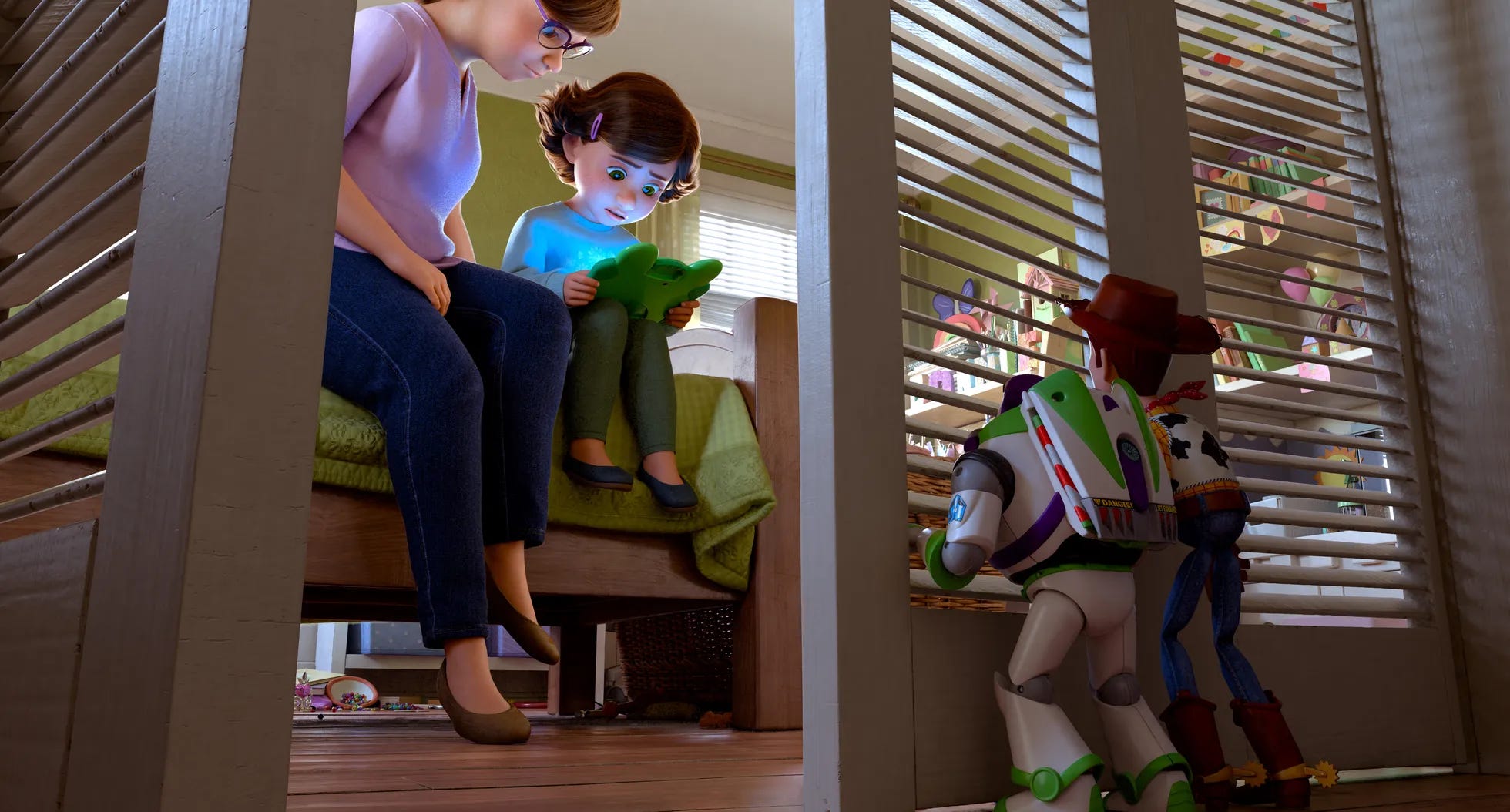
Bonnie, the little girl who has been entrusted with Andy’s childhood toys, is having trouble making friends. Part of what makes her unique is that she still plays with physical toys. while many kids her age are now obsessed with an iPad-like device called Lilypad.
Jessie, who is one of Bonnie’s favorite toys, looks across the neighborhood to try to find a friend for Bonnie, but all she can see in homes are the eerie glow of screens.
In an attempt to help, Bonnie’s parents buy her a Lilypad so she can join a group chat with three girls from her dance class. The girls immediately invite Bonnie over for a sleepover, but ignore her the whole time. Later, they use the chat to make fun of Bonnie for still playing with toys.
At her whits end, Jessie radios Woody, who returns sporting a pancho and a bald spot. The primary toy from the first film is going through a midlife crisis, quite possibly mirroring those 10-year-olds who saw him in movie theaters for the original Toy Story and are now 40-year-old dads taking their children to the movies.
Through some contrived circumstances, Jessie ends up at the home of her first child, where a young girl named Blaze lives now. Jessie believes she would be the perfect friend for Bonnie if they could ever connect the two.
While there, Jessie meets some older, ignored tech toys with low batteries, like Smarty Pants, a potty-training toy voiced by Conan O’Brien. Jessie comes to recognize that tech toys aren’t automatically bad. She also realizes she did make a difference in the life of her first owner.
When Lilypad sees that the girls used her to make fun of Bonnie, she decides to donate herself. But Jessie convinces her that she has a role to play and that she can help bring Bonnie and Blaze together.1
In the end, the two girls finally make a true connection and have playdates that involve all of the toys, including Lilypad, who takes photos and sends them over to the tech toys at Blaze’s for them to enjoy.
What is meant to be this heartfelt moment of shared joy, however, is the illustration of the disconnect of the film. I would be furious as a parent to realize that devices were covertly taking photos of my children and sending them somewhere without my permission.
There’s magic in child’s toys coming to life, but there’s maliciousness in our technology spying on us. Toy Story 5 can’t seem to delineate between a fantasy dream come true and the sci-fi nightmare we’re currently living in.
Toy Story 5 can’t seem to delineate between a fantasy dream come true and the sci-fi nightmare we’re currently living in.
Lilypad tells Jessie that she wants what’s best for Bonnie. There are a host of problems with that statement, with the primary one being it’s not true. Those behind technology do not want what’s best for Bonnie or you.
Multiple lawsuits and whistleblowers have revealed the inner workings of social media companies. They are knowingly harming children, teenagers, young adults, parents, senior adults, and anyone else for their own benefit.
A Lilypad connected to the internet is not the same as a Buzz Lightyear action figure. Not because toy companies cared more about children in the ’80s and ’90s than tech companies do today.
Companies were just as cynical and concerned with making money then, but they lacked the ability to do as much damage during their commercial pursuits.
Action figures and baby dolls didn’t have daily streaks or other gamifications to make the play addictive.
Yes, Mattel made the Masters of the Universe cartoon to sell He-Man toys. Hasbro used Saturday mornings as marketing for GI-Joe and Transformers.
But once the toy was purchased, their influence stopped. They didn’t care how long you played with the toy because they had their money.
Tech companies and social media apps have a different incentive. Tech doesn’t care about stoking your imagination; it wants to steal your attention. Their stated goal is to keep you on their platforms as long as possible because you are the product they are selling to advertisers.
Despite those obvious villainous attributes, Toy Story 5 can’t commit to a full-fledged criticism of children being absorbed in their screens. The movie won’t make Lilypad a true villain trying to replace tangible toys and real friendships.
Disney won’t make that criticism too sharply because it wants you to download the Toy Story game on your iPad. They even made a Lilypad toy to sell.
That’s why, despite the lingering Toy Story charm, the latest film feels uneven. It’s bogged down by a refusal to level a true critique of technology companies.
It’s also carrying the weight of a giant media corporation doing all that it can to keep a kids’ movie franchise going even when the franchise is old enough to have kids of its own.
While Toy Story 3 and Toy Story 4 gave viewers sentimental send-offs for the characters, but continued the narrative anyway, Toy Story 5 was at least honest enough with the audience to not feign an emotional ending.
Undoubtedly, Toy Story 6 is already in some stage of development. When the next installment comes around in another seven to 10 years, I may have a grandchild I can take to see it by that point.
I’ll probably laugh at senior citizen Woody, cry with Bonnie as she decides to leave the toys behind, but then shake my head when she gives them to another child, setting up another trilogy, all while the new Lilypad smartwatch records the touching moment, uploads them to a happy AI cloud, which then sends a reminder to buy some more tissue to Bonnie on the screen and me as I leave the theater.
I’m ignoring a whole plotline of a crate of new tech-enhanced Buzz Lightyear toys that crashed on a deserted island, which seems entirely contrived for a specific moment in the movie.