

The Uncanny Faith of X-Men 97
The revival series picks of the religious thread woven in the X-Men: The Animated Series.

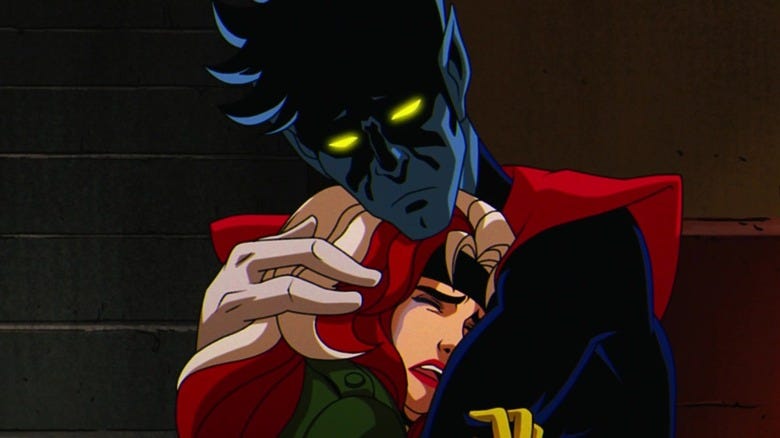
As a 90s kid, my first introduction to comic book characters and superheroes came through cartoons. Spider-Man: The Animated Series and Batman: The Animated Series were great, but my favorite was X-Men: The Animated Series.1
The brightly colored weekly adventures of Charles Xavier and his mutant students were my gateway into comic books and later superhero movies. In many ways, the versions from that series were the X-Men to me.2
So I was anxious to see the X-Men 97 revival series on Disney+—anxious to enjoy some childhood nostalgia and anxious to see if they could recapture much of what made the original so engaging. Part of what made X-Men: The Animated Series so groundbreaking was the way it incorporated religion into show and the lives of its characters.
To understand how X-Men 97 explores religion in its season two finale, we first need to look at what the original show did.
Next week, paid subscribers will start our Narnia read-along of The Last Battle. Don’t miss out on your opportunity to go further up and further in!
Become a paid subscriber to join our chapter-by-chapter discussion. Join now for 20% off for one year.
In an early episode, Wolverine, Storm, Morph, and Beast break into the Mutant Control Agency to destroy files that name mutants.3
As he works to find and destroy computer files, not quickly enough for his teammates’ liking, Beast quotes theologian John Wesley: “Though I am always in haste, I am never in a hurry.” On the screen, a list of mutant names appear, the last of which is “John Wesley.”4
This set the tone for the show to deftly weave in religion, the most famous example being the introduction of Nightcrawler.5 While he may look demonic, Kurt Wagner is a devout Catholic living as a monk. A vacationing Wolverine, Rogue, and Gambit must protect him from terrified townspeople.
For much of the episode, Wolverine challenges Nightcrawler’s faith. He confronts him with the problem of evil, but through a distinctly mutant lens.
Unleashing his claws, Wolverine snarls, “Don’t tell me about God! What kind of God would let men do this to me?” Nightcrawler retorts, “Our ability to understand God’s purposes is limited. But we take comfort in the fact that His love is limitless.”
Wolverine dismisses him and says that he used to believe, but he’s lived too long and done too much himself to accept it now. “Life will always be hard,” Nightcrawler responds. “I understand this better than most. Yet, despite it all, people of every faith believe there is a God who loves them. Can so many be wrong? Open your heart, Herr Logan. Would it hurt to see the world through different eyes?”
At another point, Wolverine declares that God gave up on mutants a long time ago. “No, my friend,” Nightcrawler says. “God does not give up on his children, human or mutants.”
“God does not give up on his children, human or mutants.” — Nightcrawler
In the end, the townspeople burn down the monastery and Wolverine assumes this will finally knock down Nightcrawler’s faith. Instead, Kurt points to the repentance of those who wronged him and to the new perspective gained by the townspeople. He laments the loss of the building, but “the foundation God has built in our hearts can never be destroyed.”
Wolverine still doesn’t understand, so Nightcrawler hands him a Bible. “Here, I’ve marked a few passages you may find rewarding. Remember, Herr Logan, ‘Different eyes.’” The episode ends with Wolverine kneeling in a church and reading aloud from the Bible.6
Nightcrawler’s Bible returns in a poignant moment in the finale of X-Men 97.
Gambit, who coincidentally dismissed Nightcrawler’s belief in the original series, has been inhabited by Apocalypse.7 Confronting the Celestials who helped empower Apocalypse, Rogue offers her life for Gambit’s. She traps Apocalypse and saves Gambit at what she believes will be the cost of her life. But it is revealed that Nightcrawler has given his life for her instead.
In the vision of the future that Nightcrawler believes his sacrifice will bring about, Rogue and Gambit open Nightcrawler’s Bible that contains a picture of him and Rogue.
I appreciated the return of his Bible, the exploration of his faith, and Nightcrawler being the one who would sacrifice his life to save others. Like the original series, the new version featured and lauded Nightcrawler’s Christian worldview. My only quibble is that they didn’t take the next step that X-Men: The Animated Series made.
When Rogue is looking down on the pages of Nightcrawler’s Bible, the only text visible on the page is “1975,” an Easter egg for his first comic appearance: Giant-Size X-Men no. 1 in 1975. They could’ve kept that reference, but also made a biblical one.
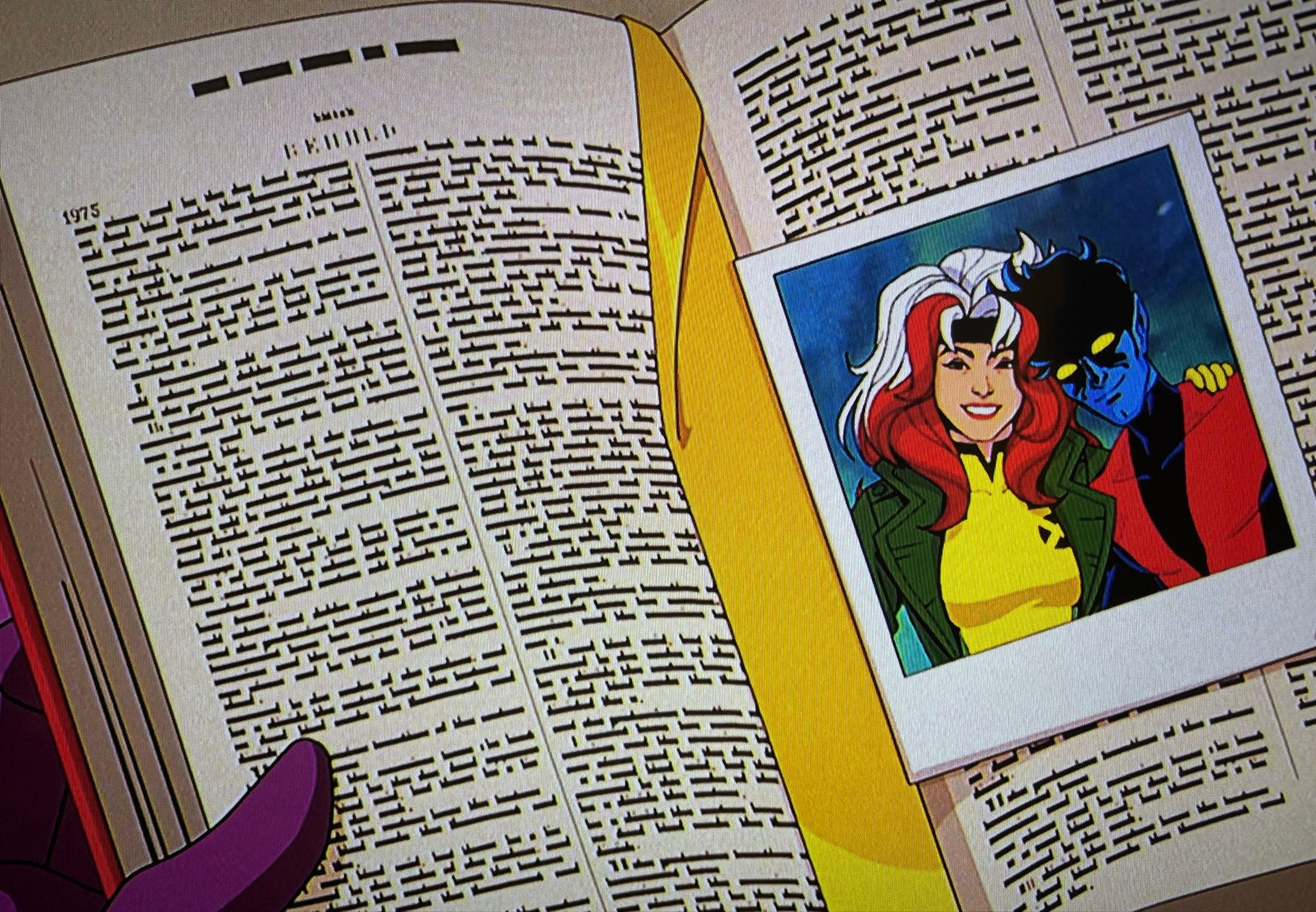
This couple has been rescued from death by their friend giving up his life. Have them look down on a Bible open to John 15 and then we read the words: “No one has greater love than this: to lay down his life for his friends.” Amazing grace. Uncanny faith.
If you want more on that iconic X-Men: The Animated Series episode with Nightcrawler and Wolverine, read this interesting interview with Len Uhley, the episode’s writer.
Discussions of X-Men 97: Season 1


For some reason, they loved calling everything “The Animated Series” in the 90s.
Despite two live-action cinematic attempts, the cartoon still told the Phoenix Saga the best.
“Night of the Sentinels, Part Two” — season 1, episode 2
From what I could tell, the other names are either people who worked on the show or their children.
“Nightcrawler” — season 3, episode 18
His exact quote is, “I will give thanks to you, O Lord. For though You are angry with me, Your anger turned away, and You comforted me. I will trust, and I will not be afraid.” That is very close, though not exactly, a portion of Isaiah 12:1-2. It leaves out a line that says, “Indeed, God is my salvation.” I guess, there’s only so far you can push the envelope.
Interestingly enough, in that original series episode, Wolverine sees Gambit struggling at skiing and says, “Man doesn’t break a sweat against Apocalypse or Magneto. So what nails him? A pine tree.” Nails and a tree? It seems an odd way to say that unless they’re making another allusion to Jesus.