

“The Silver Chair” Conclusion
C.S. Lewis Read-Along, Vol. 4, Issue 18

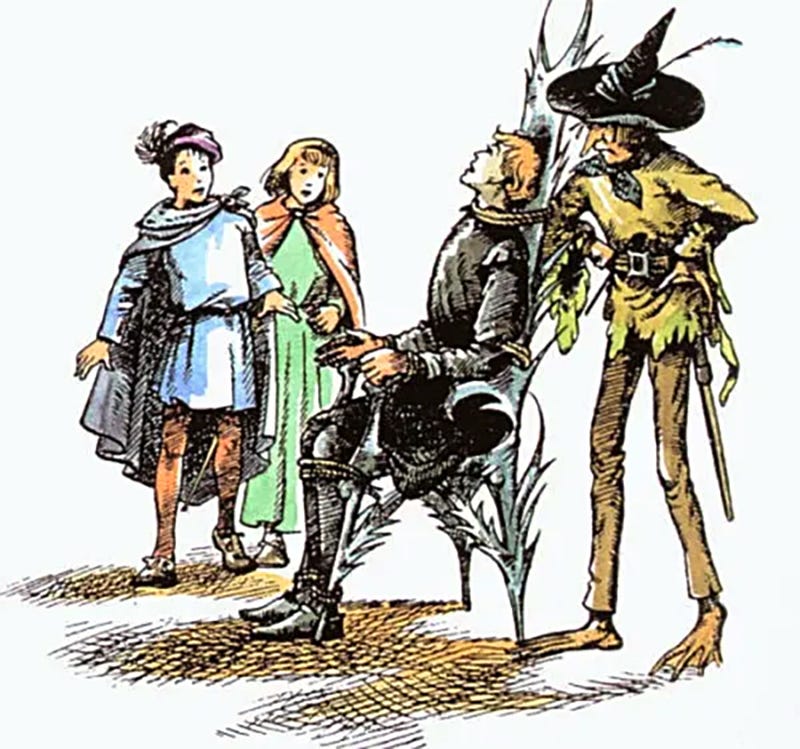
In our read-along of The Silver Chair, we’ve gone there and back again, but not like Bilbo. We followed Eustace and Jill, as they’ve traveled from our world to Aslan’s Country to Narnia to the Underworld and then back up to Narnia, up to Aslan’s Country, and out to Earth.
There are levels within the story and levels to understanding The Silver Chair. Most simply, it serves as a fun children’s story, but that’s certainly not all that’s happening.
Lewis said the book was about “the continued war against the powers of darkness.” There are also elements of Lewis drawing from classic works of literature like Virgil’s Aeneid, Dante’s The Divine Comedy, and Shakespeare’s Hamlet. He continues to weave into his Narnia stories, elements from George MacDonald and Edmund Spencer.
Lewis is also explaining Plato’s allegory of the cave from The Republic and providing philosophical elements for a defense of Christianity. He said that Puddleglum’s speech was a version of the ontological argument for God’s existence.
So, if you’ve read along with us, you’ve likely seen that there is a lot more happening than meets the eye with The Silver Chair.
If you missed out, become a paid subscriber today to gain access to all the archives at The Wardrobe Door, including The Silver Chair read-along, as well as the read-alongs of The Lion, the Witch and the Wardrobe, Prince Caspian, and The Voyage of the Dawn Treader.
Below, you’ll find brief summaries for the each article with links to full piece. I’ve removed the paywall from the introduction, but the read-alongs for each chapter are still for paid subscribers only. There are also links to the 77 resources I used, including 29 from Lewis himself.
The Silver Chair introduction — One may imagine C.S. Lewis crafting the Narnia stories during relative peace and calm in his life, but that was not the case. The years he spent writing The Chronicles of Narnia, including The Silver Chair, were some of the most tumultuous of his life.
Chapter 1 “Behind the Gym” — The Silver Chair may be the only school story in The Chronicles of Narnia. Not only because, unlike the others, it starts at school during the fall, but also because Lewis uses it as a commentary on and a means of education. He wants to say something about how people learn while also teaching the reader important truths.
Chapter 2 “Jill Is Given a Task” — This is undoubtedly one of the most theologically rich chapters in all of The Chronicles of Narnia. We discover Aslan as the one who quenches the deepest thirst and calls people to come and drink. Once they have drank, he sends them out with a task and a purpose, but not without help. They are sent by his breath and given his word.
Chapter 3 “The Sailing of the King” — Jill learns what Aslan meant when he told her that the air will thicken in Narnia and the signs will not look as she expects them to look. Her mind focuses on other things, particularly her comfort. We worship the God of all comfort, but that does not mean we experience perpetual comfort in this life. The very fact that we need God to comfort us demonstrates that this is not an inherently comfortable life. If we are finding our comfort here, we are not finding it in Him.
Chapter 4 “A Parliament of Owls” — For C.S. Lewis, as opposed to J.R.R. Tolkien, the issue is not an in-depth backstory for the villain or even an analysis of the source material behind the character. The point is to create a character that resonates with the reader and helps them grasp lessons through fiction that may be eluding them in real life. As we are trained to see through evil disguises on the page, we become more skilled at doing so in person.
Chapter 5 “Puddleglum” — Lewis said his best Narnian creations were Reepicheep and Puddleglum. The name “Puddleglum” came from a minor 16th century poet who described the River Styx as a “puddle glum.” Lewis applied that name to a character based on his gardener Fred Paxford. Walter Hooper, Lewis’ friend and secretary, described Paxford as “an inwardly optimistic, outwardly pessimistic, dear, frustrating, shrewd countryman of immense integrity.”
Chapter 6 “The Wild Waste Lands of the North” — If Lewis drew from Deuteronomy 6 when writing about Aslan’s signs, then this chapter shows what happens when we fail to regularly immerse ourselves in God’s Word. We struggle to be who He has created us to be. Not only does His Word guide us, it shapes us as we engage with it.
Chapter 7 “The Hill of the Strange Trenches” — Aslan has called the children to Narnia, but not only for Narnia. He has brought them here for their sanctification. In this moment, they are still seeking their personal comfort and happiness to the detriment of others and the calling they have received.
Chapter 8 “The House of Harfang” — C.S. Lewis had a unique perspective on Scripture, but he maintained a high view of God’s word. We can see it in how he portrayed the Bible through the signs of Aslan. As Lewis wrote, “We are committed [to believe] whatever can be proved from Scripture.” Our responsibility is to hear what God has to say and then obey.
Chapter 9 “How They Discovered Something Worth Knowing” — When our choices take us off God’s path, our return does not always automatically result in an easier way. The closer we draw to Him, the more we realize how far away we really are. God uses those difficult moments to help craft us into who He created us to be. The process is long and painful, but if God feels it is worth the cost to Him, we can be sure it is worth the cost to us.
Chapter 10 “Travels Without the Sun” — Drawing from Greek philosophy and classic literature, C.S. Lewis equips readers in this seemingly simple chapter of a children’s fairy tale with the tools to respond to a materialistic explanation of creation and a skeptical approach toward Scripture.
Chapter 11 “In the Dark Castle” — Just as the trio’s trust and obedience to Aslan’s words are tested in the most difficult moment, we reveal the depth of our devotion to Christ when we obey Him during the toughest seasons. It’s why Screwtape wrote that “courage is not simply one of the virtues, but the form of every virtue at the testing point.”
Chapter 12 “The Queen of the Underland” — While this is not the end of The Silver Chair, “The Queen of the Underland” is the book’s climax. The verbal confrontation between the Queen and the others culminates all that has happened to this point. Aslan’s signs have enabled them to find Rilian, but their trust in him, despite all their doubts, enables them to rescue the prince.
Chapter 13 “Underland Without the Queen” — Aslan’s sign of his presence, appearing on Rilian’s shield, was a good gift of grace shown after obedience had already begun. We can’t wait for a sign in the heavens to trust in God and follow Him. If the signs come at all, they often come after we take the first steps of obedience.
Chapter 14 “The Bottom of the World” — Once freed from slavery, the gnomes find their voice, begin to celebrate, and long for home. That sounds like our experience of freedom in Christ.
Chapter 15 “The Disappearance of Jill” — Regardless of their surroundings and outward appearances, there is something obvious and unmistakably evident on those who follow God’s will. It is reflected glory.
Chapter 16 “The Healing of Harms” — Lewis said The Silver Chair was about “the continued war against the powers of darkness.” What is the end result of that war? We go home.
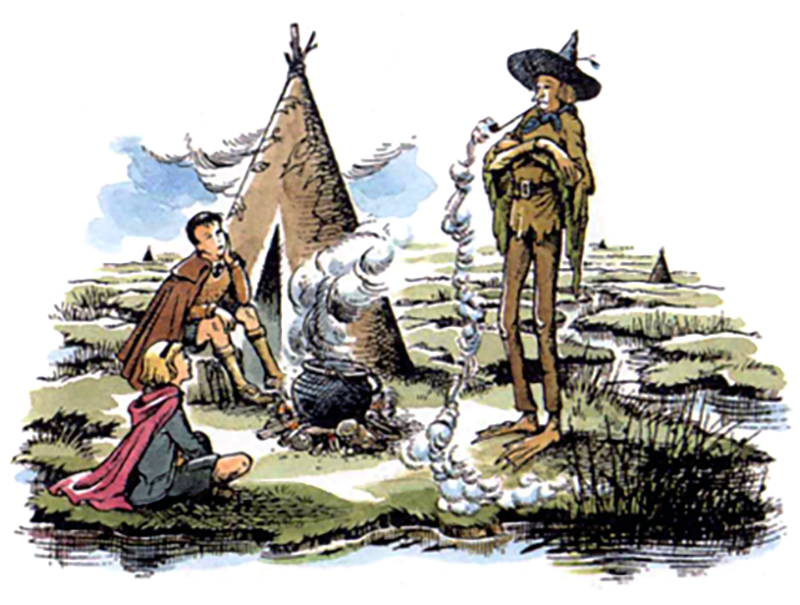
Further up and further in
Questions for readers:
What was your favorite scene from the book?
What most surprised you about the book during our read-along?
Here are all of the resources used during this read-along.
Works by C.S. Lewis:
The Silver Chair — C.S. Lewis
The Lion, the Witch and the Wardrobe — C.S. Lewis
Prince Caspian — C.S. Lewis
The Voyage of the Dawn Treader — C.S. Lewis
The Horse and His Boy — C.S. Lewis
The Magician’s Nephew — C.S. Lewis
The Last Battle — C.S. Lewis
The Screwtape Letters — C.S. Lewis
The Ransom (or Space) Trilogy — C.S. Lewis
The Great Divorce — C.S. Lewis
The Pilgrim’s Regress — C.S. Lewis
Letters to Malcolm: Chiefly on Prayer — C.S. Lewis
Surprised by Joy: The Shape of My Early Life — C.S. Lewis
The Weight of Glory — C.S. Lewis
The Problem of Pain — C.S. Lewis
The Four Loves — C.S. Lewis
Allegory of Love — C.S. Lewis
Mere Christianity — C.S. Lewis
Miracles — C.S. Lewis
On Stories and Other Essays on Literature — C.S. Lewis
Of Other Worlds: Essays and Stories — C.S. Lewis
The World’s Last Night and Other Essays — C.S. Lewis
God in the Dock — C.S. Lewis essays, edited by Walter Hooper
English Literature in the Sixteenth Century — C.S. Lewis
Hamlet: The Prince or the Poem? — C.S. Lewis
The Collected Letters of C.S. Lewis, Volume 2: Books, Broadcasts, and the War, 1931-1949 — Editor: Walter Hooper
The Collected Letters of C.S. Lewis, Volume 3: Narnia, Cambridge, and Joy, 1950-1963 — Editor: Walter Hooper
Works about C.S. Lewis and his works:
C.S. Lewis: The Companion and Guide — Walter Hooper
Past Watchful Dragons: The Origin, Interpretation, and Appreciation of the Chronicles of Narnia — Walter Hooper
Companion to Narnia: A Complete Guide to the Magical World of C.S. Lewis’ The Chronicles of Narnia — Paul Ford
Into the Wardrobe: C.S. Lewis and the Narnia Chronicles — David C. Downing
Planet Narnia: The Seven Heavens in the Imagination of C.S. Lewis — Michael Ward
The Narnia Code: C.S. Lewis and the Secret of the Seven Heavens — Michael Ward
The C.S. Lewis Readers’ Encyclopedia — Editors: Jeffrey Schultz, John G. West, Jr.
The Making of C.S. Lewis: From Atheist to Apologist (1918-1945) — Harry Lee Poe
The Completion of C.S. Lewis: From War to Joy (1945-1963) — Harry Lee Poe
C.S. Lewis: A Life — Alister McGrath
The Narnian: The Life and Imagination of C.S. Lewis — Alan Jacobs
The Christian Mind of C.S. Lewis — Editor: Andrew Spencer
The Romantic Rationalist: God, Life, and Imagination in the Work of C.S. Lewis — Editors: John Piper and David Mathis
“Into the Region of Awe: Mysticism in C.S. Lewis” Volume 4 (2004) A Collection of Essays Presented at the Fourth Frances White Ewbank Colloquium on C.S. Lewis & Friends — David Downing
“‘Evil Enchantment’ versus Platonic Vision: Dante, Lewis, and the Weight of Glory” — Jason Baxter, Sehnsucht: The C.S. Lewis Journal: Vol. 11, Issue 1
“Nothing Yet in Its True Form: Shifting Portrayals of Female Villains in C. S. Lewis’ Chronicles of Narnia,” In Pursuit of Truth Journal (Oct. 31, 2007), Carina Rumberger-Yanda
“Toward a Narnian Valuation of Nature: Participatory Ontology” in Sehnsucht: The C.S. Lewis Journal, Vol. 2, Issue 1 — Jeff Sellars
“Hamlet in Narnia: The Prince and the Poem in Lewis’s Chronicles of Narnia,” Mythlore: A Journal of J.R.R. Tolkien, C.S. Lewis, Charles Williams, and Mythopoeic Literature: Vol. 43: No. 1, Article 4 — Sarah R.A. Waters
“From Hades to Heaven: Greek Mythological Influences in C. S. Lewis's The Silver Chair,” Mythlore: A Journal of J.R.R. Tolkien, C.S. Lewis, Charles Williams, and Mythopoeic Literature: Vol. 24: No. 3, Article 5 — Amanda M. Niedbala
“The Neo-Platonic Christianity of C. S. Lewis,” Sehnsucht: The C. S. Lewis Journal: Vol. 11: Is. 1, Article 3 — Richard L.W. Clarke
“Journeys to the Underworld in the Aeneid and The Silver Chair” at CSLewis.com — David Downing
“Review of Milton, Spenser and The Chronicles of Narnia: Literary Sources for the C. S. Lewis Novels,” Sehnsucht: The C. S. Lewis Journal: Vol. 9: Is. 1, Article 15 — Nikolay Epplée
“‘Evil Enchantment’ versus Platonic Vision: Dante, Lewis, and the Weight of Glory,” Sehnsucht: The C. S. Lewis Journal: Vol. 11: Is. 1, Article 6 — Jason Baxter
“Review of The Medieval Mind of C. S. Lewis: How Great Books Shaped a Great Mind,” Sehnsucht: The C. S. Lewis Journal: Vol. 16: Is. 1, Article 10 — William Gentrup
“Book Review: Donald Williams, Answers from Aslan: The Enduring Apologetics of C. S. Lewis,” Sehnsucht: The C. S. Lewis Journal — Josiah Peterson
“Book Review: A Narnian Vision of the Atonement: A Defense of the Ransom Theory,” Sehnsucht: The C. S. Lewis Journal — William Gentrup
“Hamlet in Narnia: The Prince and the Poem in Lewis’s Chronicles of Narnia,” Mythlore: A Journal of J.R.R. Tolkien, C.S. Lewis, Charles Williams, and Mythopoeic Literature: Vol. 43: No. 1, Article 4 by Sarah Waters
Bodleian Libraries Tumblr page
Works from others:
The Aeneid — Virgil
Republic — Plato (trans. Desmond Lee)
The Idea of the Holy — Rudolf Otto
The Pilgrim’s Progress — John Bunyan
Sir Gawain and the Green Knight — translated by J.R.R. Tolkien
Macbeth — William Shakespeare
Hamlet — William Shakespeare
Ivanhoe — Sir Walter Scott
A Wrinkle in Time — Madeleine L’Engle
The Faerie Queene — Edmund Spenser
The Mortification of Sin — John Owen
The Lord of the Rings — J.R.R. Tolkien
Grimm’s Fairy Tales — Grimm brothers
A Book on Nymphs, Sylphs, Pygmies, and Salamanders, and on the Other Spirits — Paracelsus
Podcasts:
Wade Center Podcast “Into Narnia, Vol. 4, The Silver Chair” — Marion E. Wade Center, Wheaton College
The C.S. Lewis Podcast with Alister McGrath “#28 The Silver Chair” — Premiere Insights
All About Jack: A C.S. Lewis Podcast “Narnia Miniseries 04 The Silver Chair — EssentialCSLewis.com
“C.S. Lewis’s The Silver Chair: A Deep Dive With the Rev. Brian K. McGreevy”
Previous articles in the C.S. Lewis read-along:
Entries for The Lion, the Witch and the Wardrobe, Prince Caspian, and The Voyage of the Dawn Treader
Coming Soon
The next Narnia read-along, The Horse and His Boy, will start this fall. It features the one scene in Narnia that always makes me cry when I read it.
As I’m planning our next Narnian adventure, is there anything you’d like to see included in the read-along? What features do you enjoy the most? Let me know! The comments are open to everyone.
A job well done on "The Silver Chair"! I'm looking forward to the "The Horse and His Boy" read-along this fall!