

The Silver Chair: Chapter 12 “The Queen of the Underland”
C.S. Lewis Read-Along, Vol. 4, Issue 13

Background: While this is not the end of The Silver Chair, “The Queen of Underland” is the book’s climax. The verbal confrontation between the Queen and the others culminates all that has happened to this point. Aslan’s signs have enabled them to find Rilian, but their trust in him, despite all their doubts, enables them to rescue the prince.
Quote:
“I’m on Aslan’s side even if there isn’t any Aslan to lead it. I’m going to live as like a Narnian as I can even if there isn’t any Narnia. So, thanking you kindly for our supper, if these two gentlemen and the young lady are ready, we’re leaving your court at once and setting out in the dark to spend our lives looking for Overland. Not that our lives will be very long, I should think; but that’s a small loss if the world’s as dull a place as you say.”
The previous chapter ends with Prince Rilian preparing to fool the approaching Earthmen. Two enter the room, but they are walking in with the Queen. Seeing the prince free and his chair destroyed, she has “murder” in her eyes, but changes her plan.
Locking them all in the room, the Queen quickly works to recapture the prince’s mind and equally ensnare Puddleglum, Jill, and Eustace. Rilian tries to respond, but “it is not easy to throw off in half an hour an enchantment which has made one a slave for ten years.”
This should serve as both an encouragement and a warning for those who have been rescued by Christ from the evil enchantment of this world. Yes, we are free, but we are still present in this age. Be encouraged even as you struggle. As Screwtape observed, God is pleased even with our stumbles. But also be warned that you could easily fall, as you are not as free from the world’s perspective as you may think.
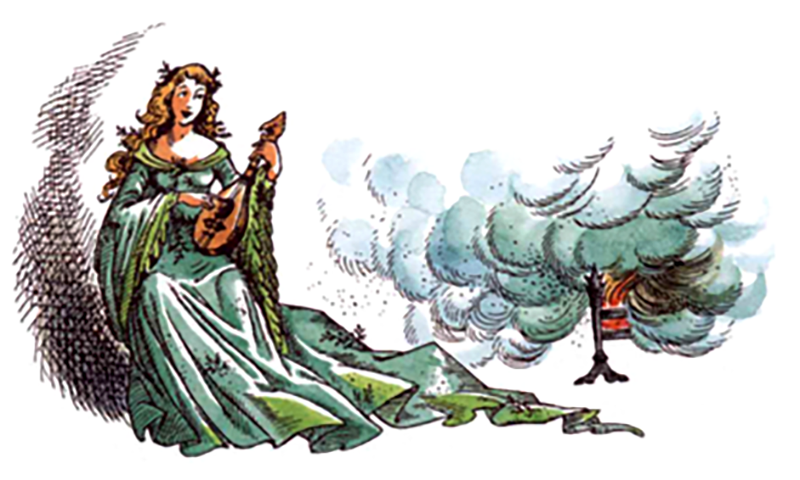
Rilian says he wants to return to Narnia with the other three. Instead of responding, the Queen tosses a handful of green powder into the fireplace, filling the room with a “very sweet and drowsy smell” that grows stronger and makes it harder to think. She also takes out a stringed instrument and begins a “steady, monotonous thrumming” that “got into your brain and your blood.”1
The Queen starts with a simple question: “Narnia?” Then she dismisses the idea by saying that was something the prince said during his “ravings.” She says he is very sick. “There is no land called Narnia.” Here, Lewis draws from literary witches to flesh out this Queen, but he also borrows from the first deceiver. The serpent in the Garden of Eden first questions God’s instructions and then blatantly contradicts them.2
For much of the chapter, we see Rilian, Puddleglum, and the children try to resist the Queen’s arguments but constantly fail. It’s not that the Queen has better logic. Her argument does represent a type a philosophical perspective, which we’ll discuss shortly, but she mainly employs a rhetorical trick. Lewis frequently saw this tactic used in his day, and it has only become worse since then.
