

The Silver Chair: Chapter 11 “In the Dark Castle”
C.S. Lewis Read-Along, Vol. 4, Issue 12

Background: Just as the trio’s trust and obedience to Aslan’s words are tested in the most difficult moment, we reveal the depth of our devotion to Christ when we obey Him during the toughest seasons. It’s why Screwtape wrote that “courage is not simply one of the virtues, but the form of every virtue at the testing point.”
Quote:
“Do you mean you think everything will come right if we do untie him?” said Scrubb.
“I don't know about that,” said Puddleglum. “You see, Aslan didn’t tell Pole what would happen. He only told her what to do. That fellow will be the death of us since he’s up, I shouldn’t wonder. But that doesn’t let us off following the sign.”
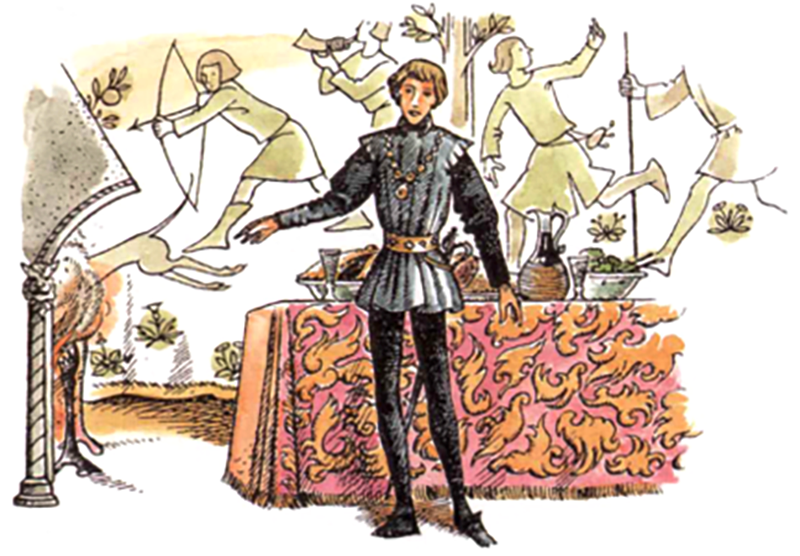
We begin with the Black Knight1 serving our traveling trio a meal and telling them what he can remember of his story, his current circumstances, and their future plans.
He doesn’t know much about his life before meeting the Queen, but he assumes she saved him from some great tragedy. In this season, he is “bound by a spell,” which first turns him into a violent, wild man before he transforms into a serpent.2 In the future, he says they plan to come up below an Overworld kingdom and take over.
Interestingly, all through the story, Lewis records the Knight’s asides to Puddleglum, Jill, and Eustace where he asks about serving them more drink or food. In other books, like Prince Caspian and The Voyage of the Dawn Treader, Lewis tells the reader that he is going to skip over interruptions or other issues that delay the telling of the story.3
The Knight reveals that their plan to take over a kingdom on the surface will be enacted soon. The Earthmen have dug just under the surface. Once they break through, the Knight says they will quickly kill the ruler and control the land with him as king and the Queen serving as his advisor.
When Eustace brings up how those being conquered will certainly have a different perspective, the Knight, for the first time, becomes visibly “troubled,” before returning to a more silly, comical approach to the situation. In this brief scene, we see more of Lewis’ turn on Plato. The Knight has his perspective challenged, and brief doubts creep in, but he quickly returns to the safety of his metaphorical cave.
