

C.S. Lewis Hated Hymns But Loved Hymn Singers
He called church hymns “fifth-rate poems set to sixth-rate music.”

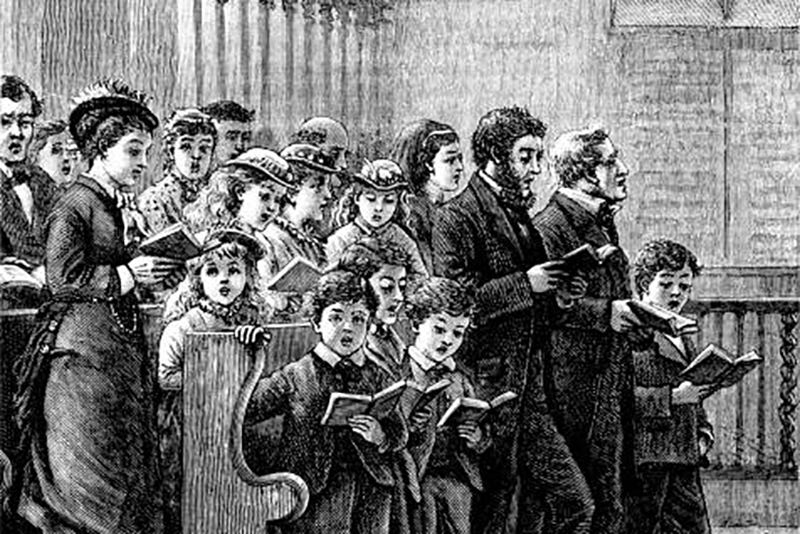
C.S. Lewis made his opinion of church hymns well known. He didn’t like them before he became a Christian, and his opinion didn’t magically change after conversion. But unlike many modern churchgoers, he came to view his preferences as unimportant. He may have hated hymns, but he loved the one singing hymns beside him in the church pew.
In 1944, Lewis was asked to host a public Q&A. One attendee asked if church attendance was necessary for life as a Christian. He said very early in his faith that he felt he could just stay in his own room and read theology. He had no desire to attend church.
Part of the reason was the hymns:
I disliked very much their hymns, which I considered to be fifth-rate poems set to sixth-rate music.
“Answers to Questions on Christianity,” God in the Dock
Even when he started attending church services, Lewis made it his habit to leave the service during the hymns.
Writing to his brother, he shared an awkward situation when their pastor began the service by saying it was preferred if everyone would wait until the service was over before leaving—clearly referencing Lewis’ habit of not doing so. “We went out during the hymn according to our usual practice,” he wrote.
Once, Lewis was asked to become a part of a panel that helped evaluate and choose new hymns. He took the opportunity to write an essay, which included his blunt opinions on the topic.
What I, like many other laymen, chiefly desire in church are fewer, better, and shorter hymns; especially fewer.
“On Church Music,” Christian Reflections
Music maturity
As Lewis matured in his faith, however, he realized his musical preferences weren’t primary. He grew in his appreciation and respect for his church, the leaders and the other lay people, and even (begrundingly) their hymns.
A reader wrote and asked his opinion of hymns (apparently, she hadn’t read his essays). He said that “if they have been helpful and edified anyone, then the fact that they set my teeth on edge is infinitely unimportant.”
Lewis saw his disdain for hymns as an opportunity to sacrifice his personal desires, grow in humility, and even submit to the leadership at his local church.1
In discussing a disagreement with his pastor’s choices, he asked Mary Van Deusen, “Is there not something especially good (and even, in the end, joyful) about mere obedience (in lawful things) to him who bears our Master’s authority, however unworthy he be—perhaps all the more, if he is unworthy?”
This sacrifice and submission lead to a deeper recognition of others. “If people like you and me find much that we don’t naturally like in the public and corporate side of Christianity, all the better for us,” he wrote to Van Deusen, “it will teach us humility and charity towards simple, low-brow people who may be better Christians than ourselves.”
During the Q&A in which he shared his early opinion of hymns, he went on to explain that he came to understand how little that opinion mattered.
I realized that the hymns (which were just sixth-rate music) were, nevertheless, being sung with devotion and benefit by an old saint in elastic-side boots in the opposite pew, and then you realize that you aren’t fit to clean those boots. It gets you out of your solitary conceit.
For many today, however, when they come across inconveniences or aspects of the worship service at their church that don’t match their preferences, they give up and find a different church. Lewis would argue they are undermining their spiritual growth.
In fact, he had Screwtape make just such an argument. According to the senior tempter’s advice for Wormwood, hell wants you to be a “connoisseur of churches” or, as we might say in our day, a church shopper.
You mentioned casually in your last letter that the patient has continued to attend one church, and one only, since he was converted, and that he is not wholly pleased with it. May I ask what you are about? Why have I no report on the causes of his fidelity to the parish church? Do you realize that, unless it is due to indifference, it is a very bad thing? Surely you know that if a man can’t be cured of churchgoing, the next best thing is to send him all over the neighborhood looking for the church that “suits” him until he becomes a taster or connoisseur of churches.
If you’re in a healthy church faithfully preaching and teaching God’s Word, plant yourself there. Dig deep roots even when you find aspects you don’t enjoy.
When you find yourself occasionally (or regularly) critiquing your church service, the sermons, and the music, take those criticisms as opportunities for growth.
Like Lewis, you may never change your opinion on that aspect, but God will use your sacrifice to mature you. Even if you (or the person beside you) can’t carry a tune, Christ can carry you (or cover your ears).
More from The Wardrobe Door
Coming soon
We’ll look more at what Lewis said about The Lord of the Rings and how he already rebutted the most common modern objection to Tolkien’s writing.
We’ll also examine how it is each Christian can become more unique the more they become like Jesus.
Archive

Recent


Elsewhere
Canadians See Split Between Religious Beliefs and Truth, State of Theology Finds — Lifeway Research
In a letter to Sister Penelope on Sept. 6, 1944, Lewis did note an appreciation for Isaac Watts’ hymn “When I Survey the Wondrous Cross,” or at least the sentiments expressed in it. You will also find him referencing or quoting hymns in multiple letters. His dislike did not prevent him from knowing and even appreciating hymns.