

The Magician’s Nephew: Chapter 14 “The Planting of the Tree”
C.S. Lewis Read-Along, Vol. 6, Issue 15

As Digory finds his contentment in Aslan and trusting in His goodness, he then discovers that the good Lion gives good gifts beyond what we could hope. But Uncle Andrew has cut himself off from those blessings because of his unbelief. Our trust in God’s goodness is rewarded, but always in His ways in His timing. When we try to circumvent those, we find suffering.
Chapter 14 “The Planting of the Tree”
After Digory returned with the apple, Aslan responds twice with “Well done,” mirroring the two-fold saying of Christ in the parable of the talents.1
Digory recognized the historical significance of his obedience, but, much like the servants in Jesus’ parable, he understood the focus was on the One who called him to the obedience. As he kept his eyes on Aslan, he was able to keep the proper perspective.
In The Lion, the Witch and the Wardrobe, Edmund can ignore the White Witch’s assaults on his character because he kept his gaze on Aslan. Here, Digory can avoid conceit in the same way.
Lewis often reminds us that we should have a similar focus, not on our feelings or external circumstances, but on Christ. In a June 1951 letter, he writes:
“Don’t bother much about your feelings. When they are humble, loving, brave, give thanks for them: when they are conceited, selfish, cowardly, ask to have them altered. In neither case are they you, but only what happens to you. What matters is your intentions and your behavior.”
Aslan acknowledged Digory’s temptation with the apple and called him to throw it “toward the river bank where the ground is soft.”2
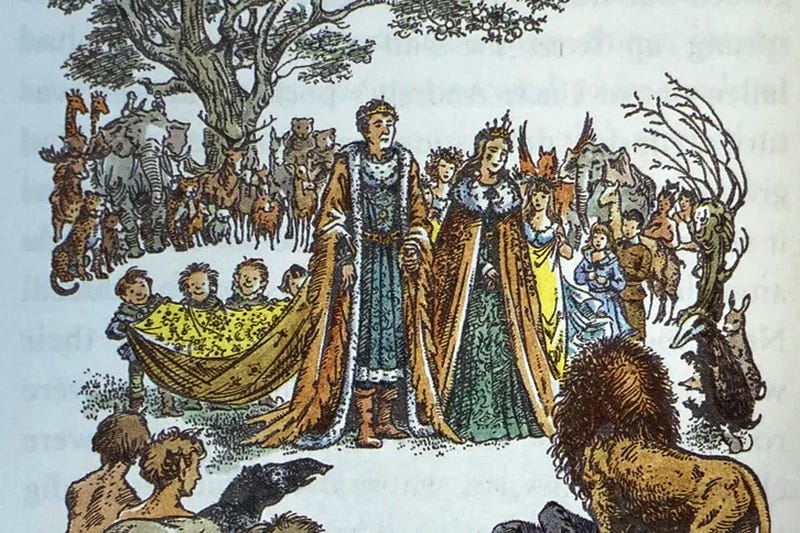
The scene moves to the coronation of King Frank and Queen Helen. The narrator, as well as Polly and Fledge, notice the change in the faces of both. Fledge notes that his “old master” has become a “real Master.”
In “Equality,” Lewis describes why he believes democracy is the best form of government and discusses human “masters.” It’s not that people are “so wise and good that everyone deserved a share in the government.” Rather, “mankind is so fallen that no man can be trusted with unchecked power over his fellows. Aristotle said that some people were only fit to be slaves. I do not contradict him. But I reject slavery because I see no men fit to be masters.”
Only through Aslan and being changed by him has the Cabby been able to become King Frank, a man worthy to be called “master.”
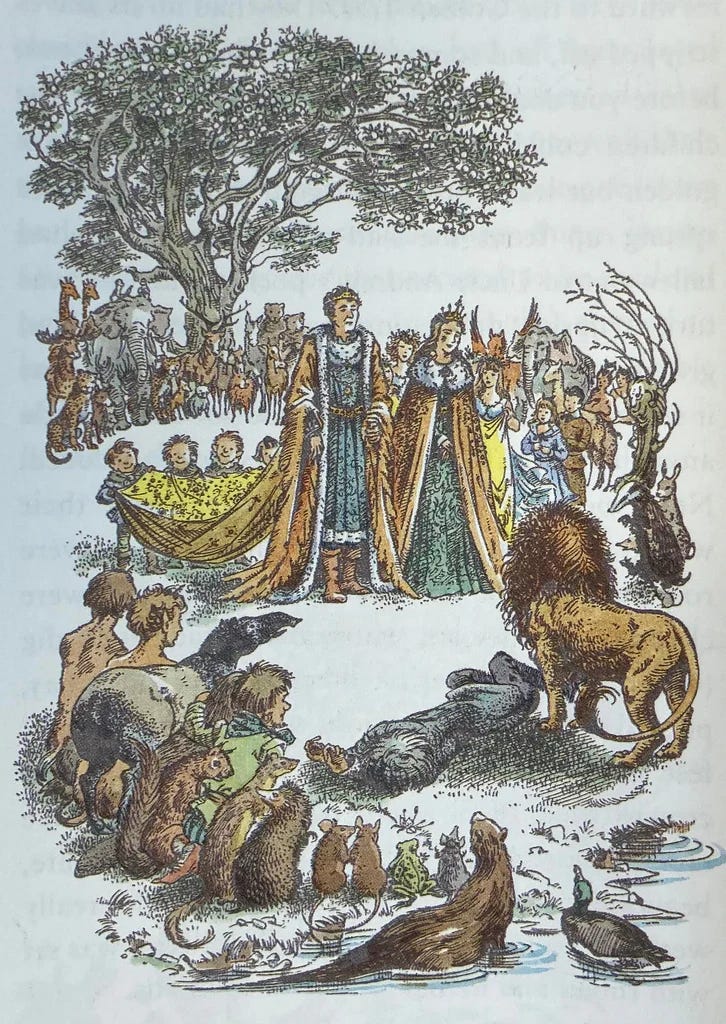
I believe Lewis intentionally moves directly from King Frank to Uncle Andrew to highlight that the latter is a man who claimed he was fit to be a master but was the least worthy of the role. For all his bluster about being above everyone else, he ends up in the lowliest of states. He has become a comedic character.
