

The Magician’s Nephew: Chapter 10 “The First Joke and Other Matters”
C.S. Lewis Read-Along, Vol. 6, Issue 11

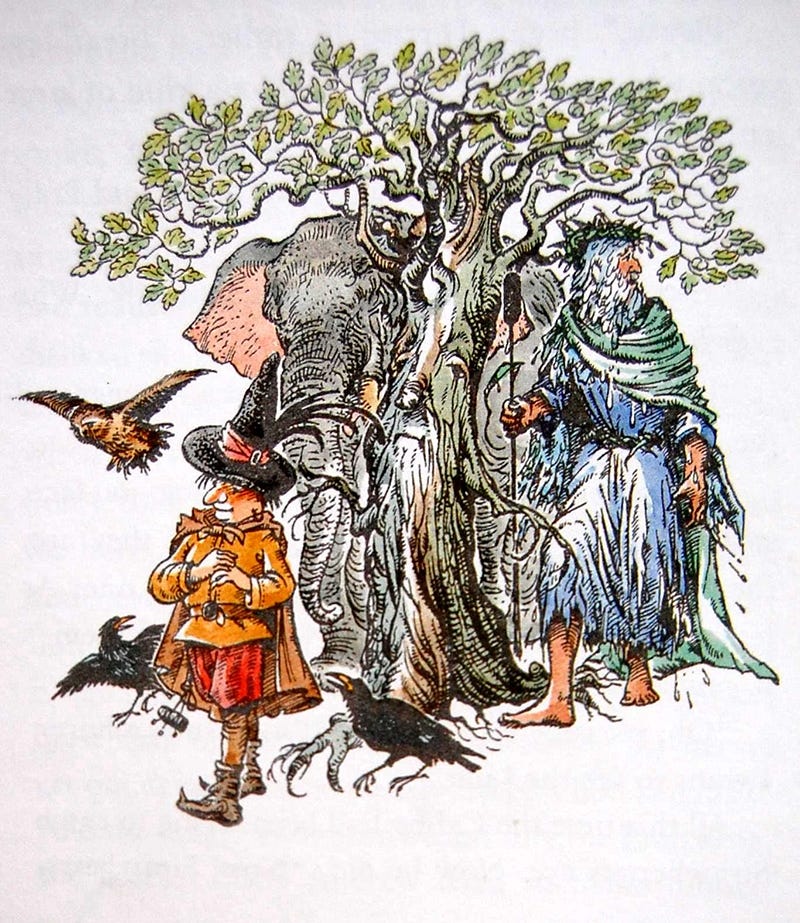
Using Uncle Andrew, C.S. Lewis demonstrates that “the trouble about trying to make yourself stupider than you really are is that you very often succeed.” Meanwhile, the Talking Beasts of Narnia learn that “jokes as well as justice come in with speech.” Both are good and necessary.
Chapter 10 “The First Joke and Other Matters”
As the chapter begins, the creation narrative continues. After the Talking Beasts, Aslan calls forth fauns, satyrs, dwarfs, tree gods and goddesses, the river god, and naiads.
All the created beings respond to Aslan’s words from the previous chapter. They echo his call to awake, love, think, and speak, but they also pledge to hear and obey him, and say they now know. Though Strawberry, who is now a talking horse, clarifies that they don’t know very much yet.
Interestingly, you can trace our responsibilities as created beings in the response of the Talking Beasts. Above all else, we are to hear and obey our Creator. Humbly recognizing our limitations, we are also to grow in knowledge of the Creator and His creation.
Aslan gives dominion of Narnia and the dumb beasts, those who can’t talk, to the Talking Beasts. And most importantly, he gives them himself, as they have been chosen to serve as his regents in Narnia.
In Perelandra, because of the good and godly care of the unfallen king and queen, the dumb animals on their planet will eventually become Talking Beasts.1
Lewis writes in The Problem of Pain how man was meant to “restore peace to the animal world, and if he had not joined the enemy, he might have succeeded in doing so to an extent now hardly imaginable.”
Because we have only seen the relationship between a fallen ruler and a fallen creation, it may often be hard for us to imagine a good regency, authority exercised positively. But the existence of the bad does not negate the existence of the good.
Authority, whether between humanity and animals or between humans themselves, can be good and right. In fact, as Lewis often argues, our recognition that things in our current reality, the only reality we have known, are bad demonstrates that we instinctively know the good.
Lewis pictures this relationship between the good regent and the rest of creation in Narnia, but Aslan also warns the Talking Beasts to “not go back to their ways lest you cease to be Talking Beasts. For out of them you were taken and into them you can return. Do not so.”
This mirrors the dual blessing and curse motif we often see in God’s call to His people in the Old Testament. We can hear Moses tell the Israelites not to return to worshipping the false gods of the people around them, or they will be taken into captivity.
