

The Horse and His Boy: Chapter 7 “Aravis in Tashbaan”
C.S. Lewis Read-Along, Vol. 5, Issue 8

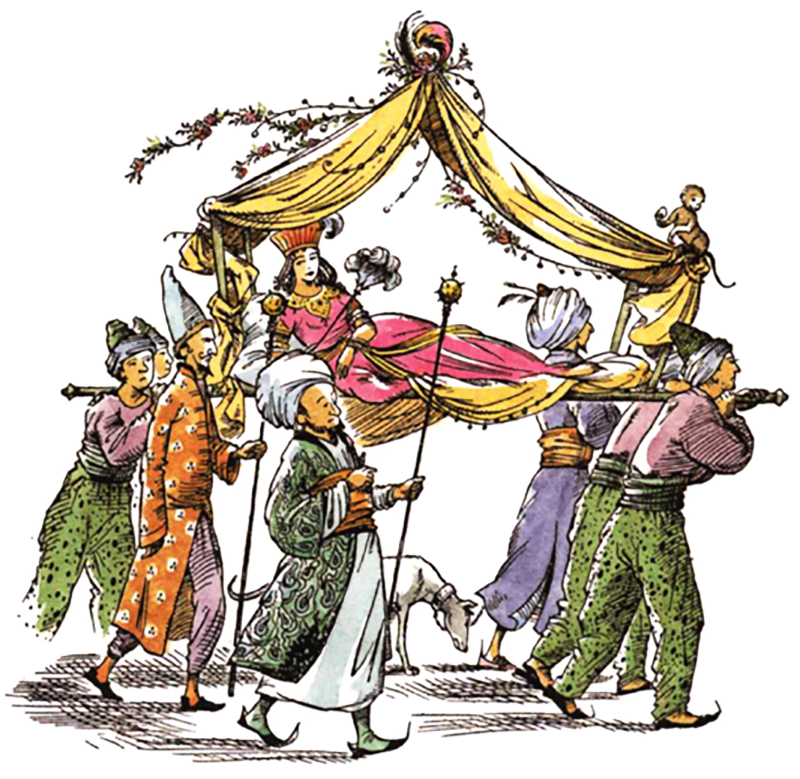
Seeing an old friend, Aravis is forced to finally choose to completely leave her old life behind. She can’t have Narnia while holding on to her Calormene perspective. Lewis recognized that our desires often need to be re-ordered. “We are far too easily pleased.”
“And with a peasant boy, too!” said Lasaraleen. “Darling, think of it! It’s not Nice.” Aravis had thought of it a good deal, but she was so tired of Lasaraleen’s silliness by now that, for the first time, she began to think that traveling with Shasta was really rather more fun than fashionable life in Tashbaan. So she only replied, “You forget that I’ll be nobody, just like him, when we get to Narnia.”
Chapter 7 “Aravis in Tashbaan”
Once already, Lewis has used a story within a story narrative construct in The Horse and His Boy—both times to catch up the reader on Aravis. Earlier, this happens through Aravis telling Shasta and Bree (and the reader) about running away from home.
This chapter more resembles Prince Caspian, where Trumpkin tells Caspian’s backstory, but we read it as if the narrator is relaying the information. Similarly, chapter 6 begins with the narrator explaining what happened to Aravis in response to Shasta’s concern in the last chapter that she was captured.
Now, we’re taken back through the events of chapter 4, but through Aravis’ perspective. When the Narnians grab Shasta, Aravis stays calm despite her heart “beating as hard as a hammer.” She quickly takes Bree’s halter and tries to lead both horses through the city, but she now has to learn what it’s like to be part of the unprivileged crowd.
It’s one thing to walk into the city and not be treated as important, but it’s another thing entirely to be walking through the city and be treated as unimportant. “Bother all these people,” she says.
She’d never had to travel this way before. She’d been the one going into a city and having criers clear out the streets for her. Now, she was being shoved to the side for all the “important” people. This gives her the first outside glimpse of who she was before. Aravis is confronted with an opportunity for change.
