

The Horse and His Boy: Chapter 4 “Shasta Falls in With the Narnians”
C.S. Lewis Read-Along, Vol. 5, Issue 5

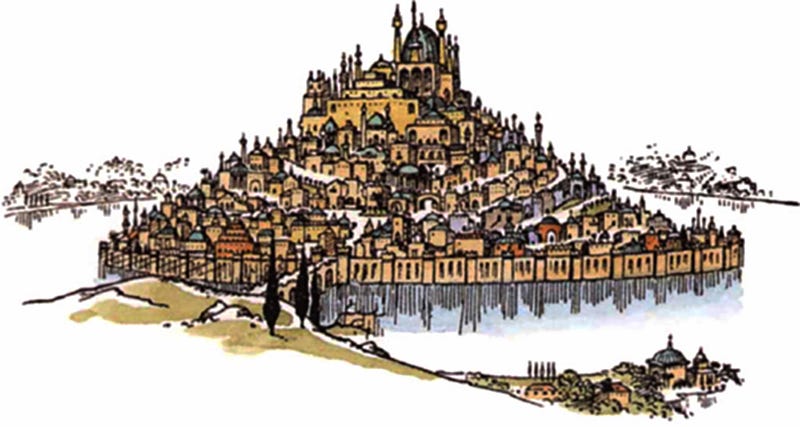
Shasta, Bree, Aravis, and Hwin make their way into Tashbaan, which is simultaneously impressive and overwhelming. Before they can make it to the other side, Shasta is grabbed by Narnians who mistake him for a missing prince of Archenland. C.S. Lewis makes his preference for rural life over city life evident.
Quote:
And instead of being grave and mysterious like most Calormenes, they walked with a swing and let their arms and shoulders go free, and chatted and laughed. One was whistling. You could see that they were ready to be friends with anyone who was friendly and didn’t give a fig for anyone who wasn’t. Shasta thought he had never seen anything so lovely in his life.
Chapter 4 “Shasta Falls in With the Narnians”
In the opening scene of this chapter, Lewis is placing us in Shasta’s shoes. Like him, we’ve never been to Tashbaan. This is a new setting for Narnia readers. You can feel the awe and wonder that grew in Shasta as the giant island city came fully into view.
From the outside, Tashbaan is an impressive sight. Shasta sees the reflected sunlight gleaming off the silver dome of Tash’s temple. He smells flowers and fruit. “This is a wonderful place,” he can’t help but exclaim. This is the first city and crowd in the Narnia books.
Bree helpfully reminds Shasta of their goal: to reach the other side and then “Narnia and the North!” The horse also feels the need to tell Aravis that she needs to look more humble. Of course, Aravis tells Bree he could do the same. Both can’t help but hold their heads up in pride, as they are used to marching nobly into the city.
Aravis’ pride gets the best of her. As she laments not being carried through the gates and treated as important, she lashes out at Shasta, who merely asked her if she was alright. Aravis tells Shasta that this is all fine for him, but he wouldn’t understand how difficult this is for her.
Lewis’ attack on pride is one of his most consistent and needed themes across his writing. He’ll return to it later in this book. He calls it “spiritual cancer” in Mere Christianity. Oural’s selfish motive in Till We Have Faces is said to be “five parts anger, and seven parts pride.” Screwtape speaks of the usefulness of pride to Hell’s schemes. In The Last Battle, the dwarves miss out on salvation because their pride won’t let them. In a letter, Lewis sums it up: “The Fall is, in fact, pride.”
