

The Horse and His Boy: Chapter 2 “A Wayside Adventure”
C.S. Lewis Read-Along, Vol. 5, Issue 3

If you want to fully participate in this The Horse and His Boy read-along and have access to everything at The Wardrobe Door, including past C.S. Lewis read-alongs, join as a paid subscriber today. This is your last opportunity for this discount.
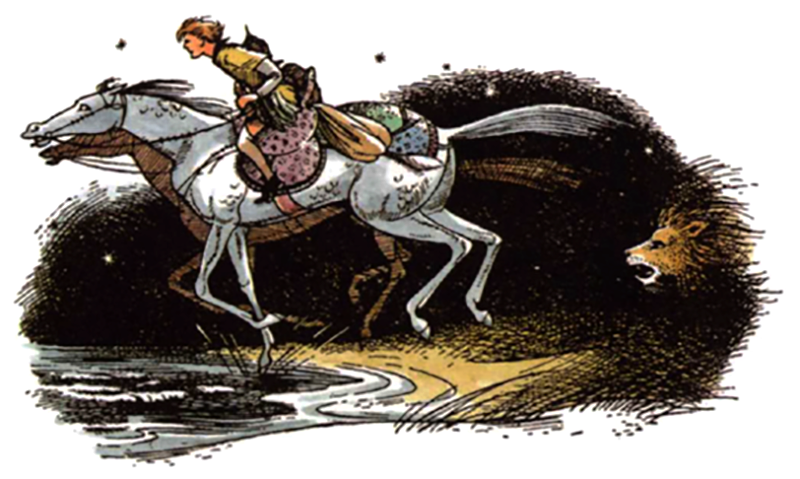
Background: Since C.S. Lewis said this book was about a person’s calling and conversion, he invited comparisons to spiritual journeys and sanctification. Enduring the pain of learning to ride (and fall off) a horse prepares Shasta for what’s to come in his life. The same is true in our own spiritual growth. Present pain prepares us for future glory. Paul tells us that our present pains are not worth even comparing to our future glories.
Quote:
These were great days for Shasta, and every day better than the last as his muscles hardened and he fell less often.
Chapter 2 “A Wayside Adventure”
Literary adventures often neatly map onto spiritual development. We even use phrases like “spiritual journey,” “walking with Jesus,” or “following God.” These connote the idea of movement, but we know that movement is never simple or straight-lined.
C.S. Lewis said The Horse and His Boy was about a person’s calling and conversion. Like many other Narnia characters and stories, we see bits of Lewis reflected in Shasta. We can also glimpse our own spiritual walk.
The first and obvious aspect of the journey is pain. Contrary to many false teachings, Christianity does not teach uninterrupted physical blessings and comforts in this life. Scripture reminds us that we are not alone and are blessed and comforted during our troubles, but we do face those troubles.
Shasta hasn’t encountered any significant setbacks in the opening of Chapter 2, but he is being prepared for those more difficult moments later. He’s sore and can’t move. His body is adjusting to riding (and falling).
Lewis speaks of pain as God’s megaphone to gain our attention, but pain also serves as our trainer. The pains and problems in Chapter 2 are necessary for the responsibilities later in the book and the blessings at the end. Shasta would not be able to discover and live out his identity if he did not endure the pain of this journey.
