

‘Stranger Things’ Missed Narnia’s ‘Deeper Magic’
The Duffer brothers invoked C.S. Lewis to explain the controversial ending.

In February, we will start our next C.S. Lewis read-along: The Magician’s Nephew. Prepare for Narnia’s return to the big screen by going chapter-by-chapter through the book being adapted.
Become a paid subscriber to gain access to those discussions, previous Lewis read-alongs, and all the archives here. For the next month, you can join for 20% off an annual subscription.
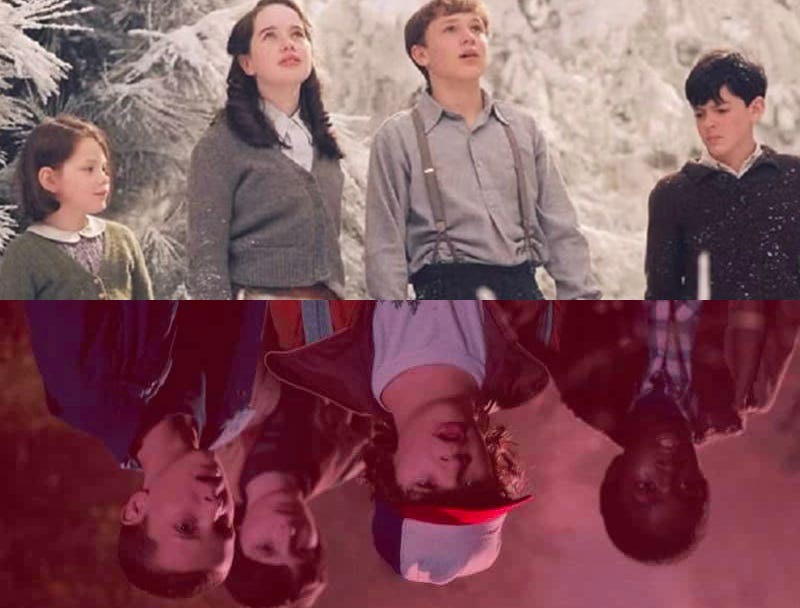
During developmental discussions about the Stranger Things finale, show writers brought up C.S. Lewis’ Chronicles of Narnia as a comparison for the series’ ending.
Later in a follow-up interview, Matt Duffer, one of the co-creators of the show along with his brother Ross, similarly pointed to Narnia.
While the Duffer brothers rightly captured one aspect of what makes Narnia so poignant, they miss the “deeper magic” that gives the series its meaning.
Spoilers below for the Stranger Things finale
At the climax of the last episode, Eleven seemingly sacrificed herself and stayed behind in the Upside Down while it was destroyed and permanently cut off from our world.
But while the other main characters were playing one last Dungeons & Dragons campaign, Mike shares a story about a mage who saved everyone by faking her own death to keep others safe.
Did Eleven die, or is she alive somewhere far away from Hawkins, Indiana? Her friends choose to believe the latter.
At Narnia Fans, Paul Martin flagged comments captured on One Last Adventure, a making-of documentary about the show’s last season, about how the writers decided Eleven’s fate.
Ross Duffer: “There’s a slightly larger discussion to be had, just as we think about this, that’s even beyond the character arc, which is the series arc. This show is about how life does throw this stuff at you, the hard stuff, but you overcome it.”
Matt Duffer: “But it’s not just about overcoming these obstacles.”
Kate Trefry: “No, it’s like the joy of the adventure.”
Matt Duffer: “And that’s what people don’t understand when we’re not killing people off because we’re always like, ‘We have to maintain this sense of fun in the show or it doesn’t become the show anymore.’ So … Or, you know, it just becomes depressing.”
Ross Duffer: “Which is why I think Eleven … I know we all talked about the trauma that she’s experienced, and I think that you have to be able to move on from that.”
Matt Duffer: “I always thought that she kind of represents magic. And so she has to leave. She has to be gone in order for them to move on.”
Paul Dichter: “Like the door to Narnia closes for you, and then some other kids are gonna find another door to Narnia later. But you’re never going back.”
Matt Duffer: “You never lose this piece of you, but you have to grow and move on from it.”
After the season aired, Matt explained their choice in an interview with The Wrap and reiterated the Narnia comparison:
Thematically, she [Eleven] represents, at least to us, the magic of childhood. She possesses these incredible powers. It’s all fantastical. So you’re leaving that behind, even though it’s always going to be a part of you. She’s the fantasy aspect of the show in so many ways, and you’re closing the door on Narnia, right? That’s what it is in a lot of ways.
The transition from Narnia into our world does serve as a picture of the transition from childhood into adulthood. Lewis makes this explicit in how characters age out.
In Prince Caspian, Peter explains to Edmund and Lucy that he and Susan won’t return to Narnia.
“Never?” cried Edmund and Lucy in dismay.
“Oh, you two are,” answered Peter. “At least, from what he said, I’m pretty sure he means you to get back some day. But not Su and me. He says we’re getting too old.”
“Oh, Peter,” said Lucy. “What awful bad luck. Can you bear it?”
“Well, I think I can,” said Peter. “It’s all rather different from what I thought. You’ll understand when it comes to your last time.”
When it does come to be Lucy and Edmund’s turn in The Voyage of the Dawn Treader, they realize that Peter was right. It is different from what they thought.
“You are too old, children,” said Aslan, “and you must begin to come close to your own world now.”
“It isn’t Narnia, you know,” sobbed Lucy. “It’s you. We shan’t meet you there. And how can we live, never meeting you?”
“But you shall meet me, dear one,” said Aslan.
“Are—are you there too, Sir?” said Edmund.
“I am,” said Aslan. “But there I have another name. You must learn to know me by that name. This was the very reason why you were brought to Narnia, that by knowing me here for a little, you may know me better there.”
As Martin wrote at Narnia Fans, Stranger Things captures this idea that you leave childhood behind, but not all the adventures in childhood that shaped you.
Yet this scene with Aslan also reveals what the Duffers miss. Narnia happened for a reason. There is intentionality behind the children being there. Aslan has brought them there, so they can come to know Him in our world.
In Stranger Things, however, we are given no providential vision. What happens in Hawkins seems random. Worship and prayers are replaced by nostalgia and friendship. The churches are empty, but the malls are full.
Concluding the story where they do, with Eleven’s fate unknown, is the result of this world without purpose. The core group all voice their belief that Eleven is alive, but that’s all they can muster.
Ambiguous endings can work, but they often reveal something about the story and storytellers. A tragic conclusion can highlight the fallen nature of our world, while a happy ending can show our intended purpose of reuniting with God and all creation.
An inconclusive ending can point to the current strange mix of our real world, but it often flows from a fictional world unsure of what it wants to be. The controversial conclusion of Stranger Things is the result of stripping the world of the supernatural but trying to infuse it with the fantastical.
Contrast that with where we find Peter, Edmund, and Lucy in The Last Battle. No, they never return to the Narnia they knew, but they discover that Narnia was only a shadow of the real Narnia. What they thought was the real world, both in Narnia and Earth, was what amounts to the Upside Down, a pale reflection of their true home.
The Duffer brothers understood part of what made Narnia so magical and timeless, but they missed the broader point of the whole story. They didn’t know the “deeper magic.” As The Last Battle concludes:
And for us this is the end of all the stories, and we can most truly say that they all lived happily ever after. But for them it was only the beginning of the real story. All their life in this world and all their adventures in Narnia had only been the cover and the title page: now at least they were beginning Chapter One of the Great Story which on one on earth has read: which goes on forever: in which ever chapter is better than the one before.