

‘Spider-Man: Brand New Day’ Brightens Comic Book Cinema
Peter Parker discovers great responsibility comes with great isolation, not just power.

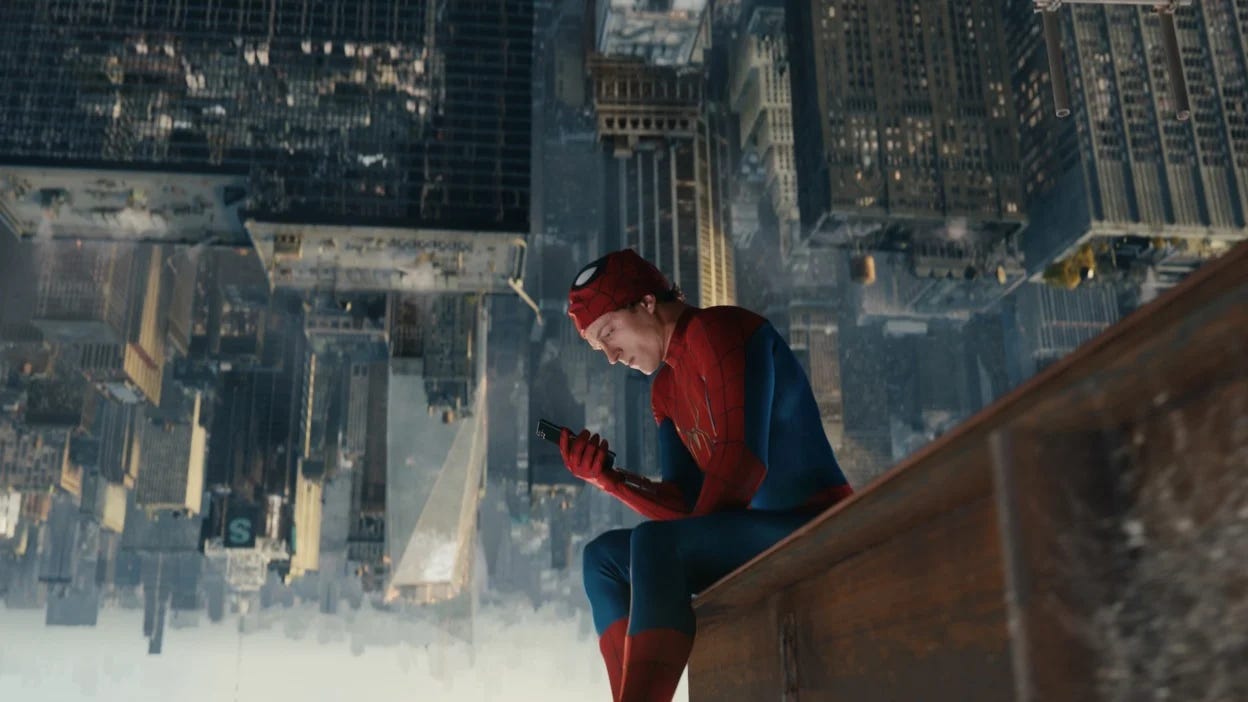
Spoiler-free review of Spider-Man: Brand New Day
Spider-Man: Brand New Day looks and feels like a comic book come to life. In a way, it borrows more from comic book aesthetic and storytelling (with a dash of video gaming) than it does from superhero movies.
Your enjoyment of the film will likely to determined in large part by how excited you are by that idea.
Fitting with a more grown-up Peter Parker, the story is more mature. How does a grieving and lonely young man deal with his isolation? He is responsible for his using his powers for good, but what responsibilities extend to his emotions?
Despite a darker story, the visuals mostly stay bright. It’s still Spider-Man, one of the few superhero movies that have been allowed to play with color. We aren’t stuck in endless shades of dour gray.
In addition, the action, including iconic web-swinging through the streets of New York, is immersive and surpasses previous MCU Spider-Man films. Spider-Man and the Punisher fight the Hulk on screen and it lives up to a young comic book reader’s imagination.
More importantly, the emotional beats work. You feel Peter’s isolation and Spider-Man exhaustion. Scenes with Zendaya, Sadie Sink, and even John Bernthal’s Punisher have weight and significance.
Going in, I worried the amount of characters and story beats seemed like they could easily overwhelm the movie. Tom Holland’s Spider-Man has already been operating in the shadows of his own movies, trying to find his on-screen footing behind Robert Downey, Jr’s Iron Man, Benedict Cumberbatch’s Doctor Strange, and the two other versions of Spider-Man with Toby Maguire and Andrew Garfield.
While Holland’s story does take the backseat to Sink’s character for a portion of the film, this still felt like the first time Holland was allowed to lead the movie. The inclusion of the other MCU characters felt organic and intentional.
They’re weren’t thrown in to demonstrate this fits within the larger Marvel Cinematic Universe. They were there because they fit within Peter Parker’s New York City and they serve a narrative purpose and provide another angle to Spider-Man’s own journey.
Spider-Man: Brand New Day sets the MCU back on solid footing both financially—this will likely be a recording-breaking film—but, more importantly, narratively. It proves they can still make crowd pleasing blockbusters that speak to large issues.
Spoiler-filled reflections on Spider-Man: Brand New Day
Tom Holland’s Peter Parker is finally the classic Spider-Man in the MCU because his moral compass points true even through struggles and isolation.
In the three previous Marvel Studio’s Spider-Man films, Peter began his hero’s journey at an advantage. That’s not to say he didn’t have lessons to learn and obstacles to overcome, but he had mentors to guide him and friends and family to walk with him.
Brand New Day finds Peter alone. After Doctor Strange’s spell in No Way Home, everyone has forgotten that he exists.
Spider-Man, on the other hand, has never been more beloved by the people of New York. An opening montage showcases him stopping multiple classic villains from his rogues gallery. But his only relationships are mediated.
He talks to police detective DeWolff, but almost exclusively over the phone and never about personal life. He’s clearly had interactions with Frank Castle, the Punisher, but always behind his Spider-Man mask.
Peter Parker has become subsumed in his crime-fighting identity because he believes that is the only way to keep everyone else safe. He rightly recognizes, as C.S. Lewis tells us in The Four Loves, that to love at all is to vulnerable, so he’s decided to sacrifice love and attempt invulnerability. It’s not going well.
Spider-Man is undergoing mutations, becoming more spider-like due to stress and isolation. His sense are heightened often to point of overwhelming him. He developed organic webbing with increased physical strength, but he’s also become more aggressive and dangerous.
Meanwhile, someone with psychic abilities is trying to break into the Department of Damage Control, the U.S. government agency that has seized dangerous tech and is holding supervillains. This individual can telepathically jump into the body of someone else and control them.
Because of his spidey-sense, Spider-Man can tell who is being controlled and can prevent the telepath from jumping into his mind. He agrees to help DODC director Bill Metzger capture this new threat, who turns out to be Jean Grey, one of the most famous mutants and X-Men from the comics.
To stop his changes and maybe stop Jean, Peter talks with Bruce Banner about the inhibitor he wears to help him control the Hulk. Peter creates a universal inhibitor that dampens his emerging powers but can also be used on others.
After helping DODC director Bill Metzger capture Jean, Spider-Man realizes the DODC has been lying. They captured Jean’s older sister Sara and experimented on her until she died. Now, Jean is facing the same fate.
Earlier in the film, before he’s revealed as a villain, Metzger gives away the insidiousness of the DODC. They collect powerful weapons and even people and use them for their purposes, under the guise of serving and protecting others.
It’s what makes them truly tyrannical, as Lewis explains: “Of all tyrannies, a tyranny sincerely exercised for the good of its victims may be the most oppressive.”1 Contrasting with Spider-Man, the DODC takes power from others so they can assume control without accepting responsibility.
Spider-Man attempts to rescue Jean, but the testing and the stress of discovering her sister died at the hands of DODC has fully unleashed her mutant ability. She psionically takes control over everyone in and around the prison.
Simultaneously, Spider-Man is overwhelmed by the henchmen until he stops relying on his inhibitor and embraces his whole self. Jean tells him he has to choose between Spider-Man and Peter Parker, but he’s finally learned to accept both.
When he finally reaches her, Jean is about to kill Metzger, but Peter invites her into his mind. There Jean hears Aunt May tell Peter that everything is about to change with his powers, some people will do terrible things because of that, but that he is loved.
“The people who love you, we love you not because you’re special,” Aunt May tells Peter and, by extension, Jean, “we love you because you’re you.”
Unfortunately, right as Jean has realized her mistakes, Frank tries to solve the issue in the only way the Punisher knows how. He fires a sniper rifle to take out Jean, but Peter spins her out of the way to take the bullet. She uses her abilities to keep him alive until Frank can get him to the hospital and he can be stabilized.
This self-sacrificial ethos is what sets Spider-Man apart from Metzger and the DODC. Both believe their actions are for the good of others, but only Spider-Man is willing to personally pay the price. DODC demands Sara, Jean, and other individuals with power give up their abilities so that Metzger can instead give them to those they deem worthy.
Paul tells the Corinthian church that the eye cannot say to the hand, “I don’t need you.” The DODC want to declare to the hand that its unique abilities should be given to another body part that’s more suited.2
Even though he never sought to take power from others, Peter realizes he did take away the power of choice from M.J. and Ned. In attempting to protect them, he prevented them from choosing to stay safe or stand by him.
He has to give them the choice, but also choose to move beyond his own isolation. Often, loneliness is our decision. We may find ourselves alone because of our circumstances, but our choices can cause us to remain lonely.
Spider-Man: Brand New Day reminds us we don’t have to remain lonely. With great isolation comes a great responsibility to not stay secluded from those who love us already or could love us if given the chance.
Miscellaneous thoughts
I understand why Marvel hid Sadie Sink’s role. If they’d confirmed she was playing Jean Gray, it could’ve overwhelmed the Spider-Man publicity with X-Men talk. But it was a risk because it has been assumed for months and the reveal in the movie isn’t treated as important by the characters because they have no idea who she is.
No one ever says the words “mutant,” “x-gene,” and “X-men.” Perhaps because Sony doesn’t have the rights to those words, despite their joint movie deal with Marvel for Spider-Man. Still, Jean is shown leaving the city on a bus, appearing to head somewhere in upstate New York. Coincidentally, the X-Mansion is located in Westchester County, New York.
The various MCU crossovers serve a narrative purpose for Spider-Man’s arc. They aren’t there just to be there. The Punisher has actually lost everyone and tells Peter he should do what it takes to reconnect with his friends. The Hulk understands trying to control the rage of an internal monster. Black Widow was grieving and alone, but realized she needed others. Jean Gray provides Spider-Man a glimpse into who he could become and offers him a chance to help someone like himself.
As great as the movie was, the post-credit scene may not worth staying for. After the entire credits finish, we find out, through Ned’s Spidey-tracker, that there’s seemingly a Spider-Man in space and are told “Spider-Man will return.” That could mean Tom Holland’s Spider-Man is out fighting incursions in Doomsday. It could mean another Spider-Man (Maguire, Garfield or even a version of Miles Morales) is coming to our world through an incursion. Maybe it’s somehow connected to a Venom symbiote.
“The Humanitarian Theory of Punishment,” God in the Dock
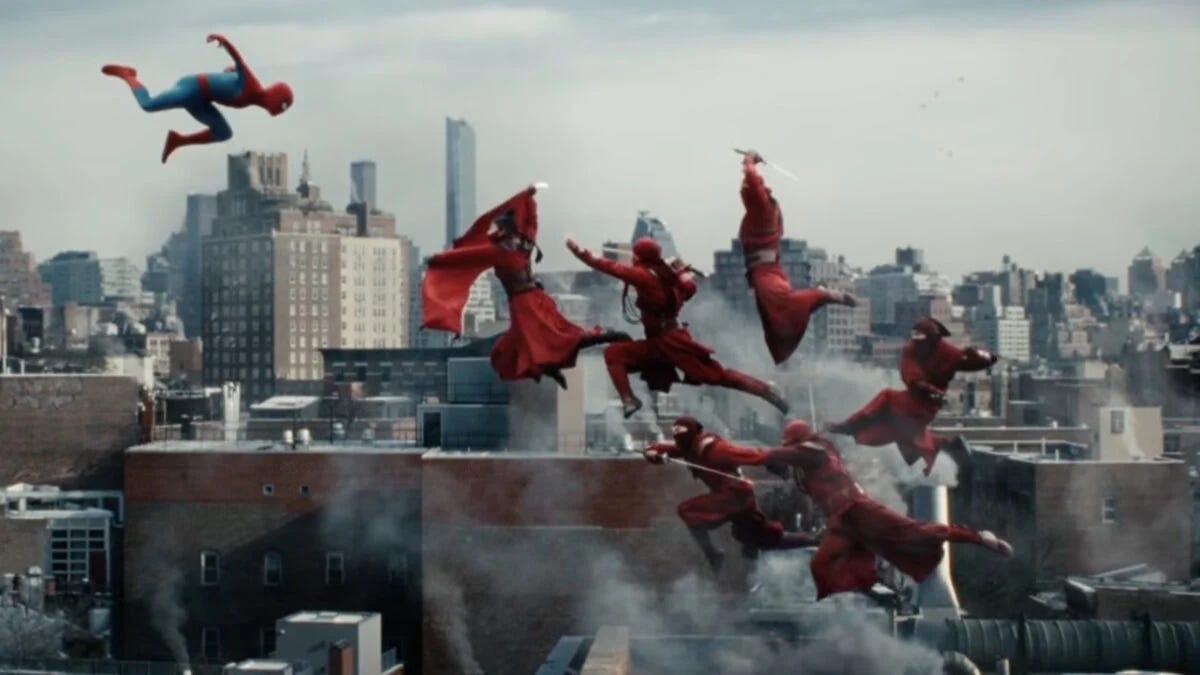
This is all the more appropriate an analogy since the evil ninja clan named The Hand serve as henchman for the DODC (for some reason).
*** Discussion of themes ***
What really struck me was that one of the key themes of the movie was the danger of messing with human nature (construed broadly). Using technology to fight nature and construct an idealized self was portrayed as dangerous and short-sighted. You see that the messiness of being an embodied creature has to be embraced rather than suppressed.
I was shocked but very happy to see that message.