
“Project Hail Mary” Reflects C.S. Lewis’ Cosmology of Light and Life
Spoiler-free reflections on “Project Hail Mary”
This is an entirely spoiler-free reflection on Project Hail Mary. I’m even avoiding one of the major plot details that has been revealed in trailers.
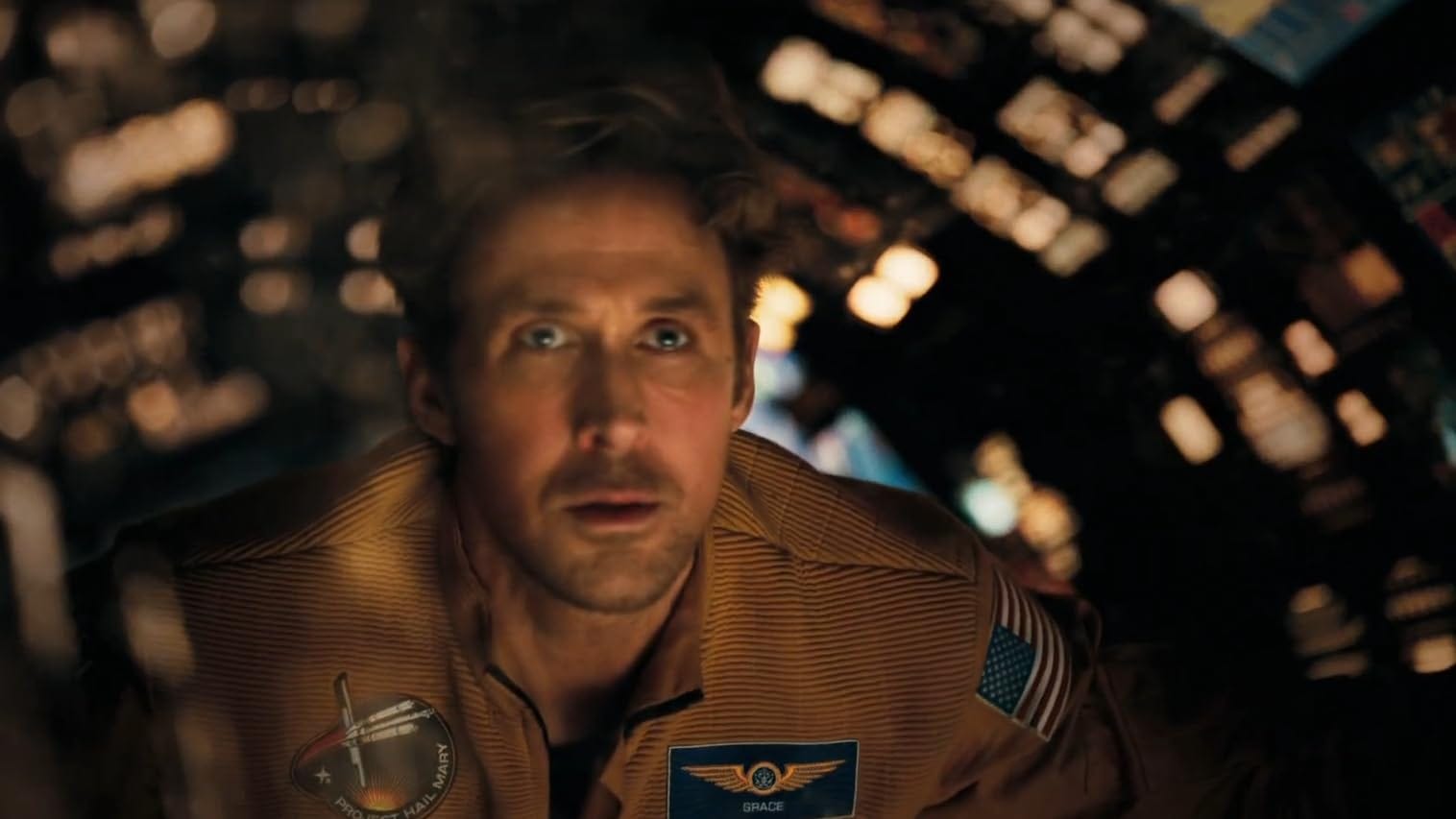
Project Hail Mary captures so much of what makes movies special. It’s a grand spectacle best experienced on a large screen and immersive sound, featuring a movie star, Ryan Gosling, in his wheelhouse with special effects that are truly special.
Based on the Andy Weir novel, Project Hail Mary follows a team of the world’s greatest scientists and Gosling’s Ryland Grace, a middle school science teacher, attempting a last-ditch effort to stop the sun from dimming and sending the Earth into a catastrophic ice age.
Throughout his space journey and adventure, Grace begins to remember who he was on Earth, but also discovers who he is now and what is truly out there.
Directed by filmmaking duo Phil Lord and Christopher Miller, Project Hail Mary has the humor and heart of their previous films like Cloudy With a Chance of Meatballs, The Lego Movie, and the Spider-Verse franchise, for which they served as producers.
At the same time, however, it captures the recent cultural shift away from dour cynicism. Grace is a flawed character, but he isn’t a skeptical hero. Much like Top Gun: Maverick, Project Hail Mary is deeply earnest.1
There’s no attempt to create a sarcastic distance between the moviegoer and the on-screen action and emotion. You are invited and encouraged to go along for the journey and experience all that Grace does.
Lord and Miller said Project Hail Mary is a P.C. movie, not a Mac.2 There is no attempt to “play it cool.” Gosling perfectly embodies the chaotic energy and sincere hopefulness that give Grace his own version of awkward cool.
Weir describes himself as a Pollyanna, seeing the good in humanity. His novel and this cinematic adaptation strive to see the bright side in life. Even in a potentially cataclysmic event, no one champions nihilism. We are called to find what or who makes us brave, even when we feel like a coward.
And, despite Weir’s personal agnosticism, Project Hail Mary lends itself more toward C.S. Lewis’ cosmology than it does the perspective of Arthur C. Clarke, whom Weir grew up reading. Lord and Miller specifically said they wanted to make outer space feel warm and inviting in the film.
Lewis recast space in his space travel stories, not as an empty void, but as full of light and life. He gave the cosmos a voice, while Earth was the “silent planet.”
In the final question in his final interview, he was asked about future space travel. Lewis responded:
I look forward with horror to contact with the other inhabited planets, if there are such. We would only transport to them all of our sin and our acquisitiveness, and establish a new colonialism. I can’t bear to think of it. But if we on earth were to get right with God, of course, all would be changed. Once we find ourselves spiritually awakened, we can go to outer space and take the good things with us. That is quite a different matter.
— “Cross Examination,” God in the Dock
Project Hail Mary gives us space travel once we “get right with God.”
The film is not explicitly Christian, but it is, whether it realizes it or not, inherently so. Weir said he gave Ryland Grace his last name as a pun with the name of the project and rocket—The Hail Mary is full of Grace—but that doesn’t mean that’s all it functions as. Grace serves as the sacrificial savior of all humanity.
To keep this spoiler-free, I will only say that Grace’s journey is not a one-to-one correlation with Jesus’. He does not initially live up to his name, but eventually he chooses to sacrifice himself for his friend. What greater love can a man have?3
God’s grand narrative is present in the film, even if some refuse to acknowledge it. Similarly, in “The Seeing Eye,” Lewis responds to Soviet cosmonauts reporting that they did not find God in outer space.
Space-travel really has nothing to do with the matter. To some, God is discoverable everywhere; to others, nowhere. Those who do not find Him on earth are unlikely to find Him in space. (Hang it all, we’re in space already; every year we go a huge circular tour in space.) But send a saint up in a spaceship and he’ll find God in space as he found God on earth. Much depends on the seeing eye.
“The Seeing Eye,” Christian Reflections
Much, if not most, depends on the eye, but some depends on the lens we look through. A dirty or distorted lens will not give us the same perspective of the wonders of the heavens as a clean one.
Project Hail Mary gives us a clear look at the glories of creation, the precariousness of humanity, the joy of friendship, and the path of salvation through sacrifice.
Similarly, it feels like an 80s movie the whole family can enjoy. At my showing, I sat beside a row of senior citizens who were enthralled.
I say this as a Mac user typing this on a MacBook. But those early 2000s “I’m a Mac, and I’m a P.C.” commercials feel dated. Even the concept comes across as needlessly mean. Apple wanted consumers to connect them with “cool.” Today, we’ve almost swung fully in the opposite direction, where “cringe” is cool.
John 15:13


